Rustic Realities

We moved to Normandie from a modern townhouse-condo in Harbour Pointe, Mukilteo, Washington. It was complete with walking paths, yard maintenance, and a two car garage. Now we live in very rural France. It has been quite a change, and we have enjoyed it. Yet, the reality of our rustic life is ever present.

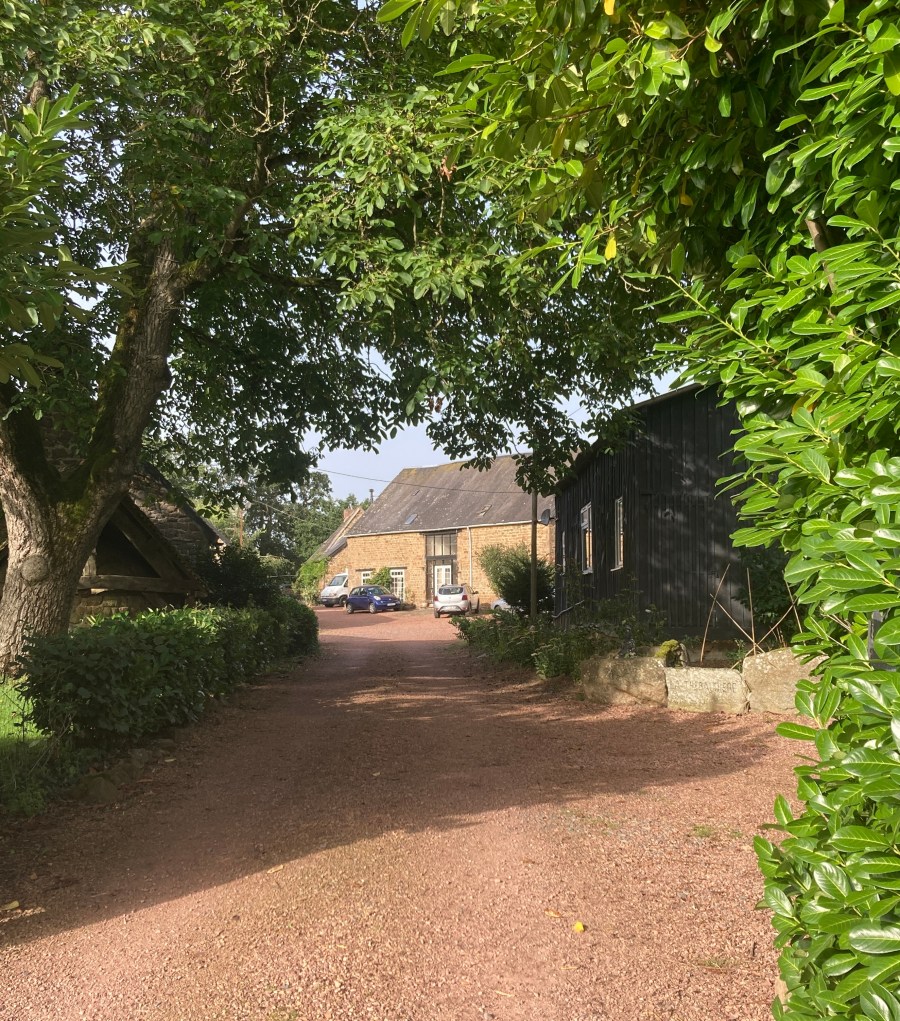
This is the entry into our little village, after driving 0.40 miles from the narrow main road through a dairy farm. Chez nous is the one in the center.

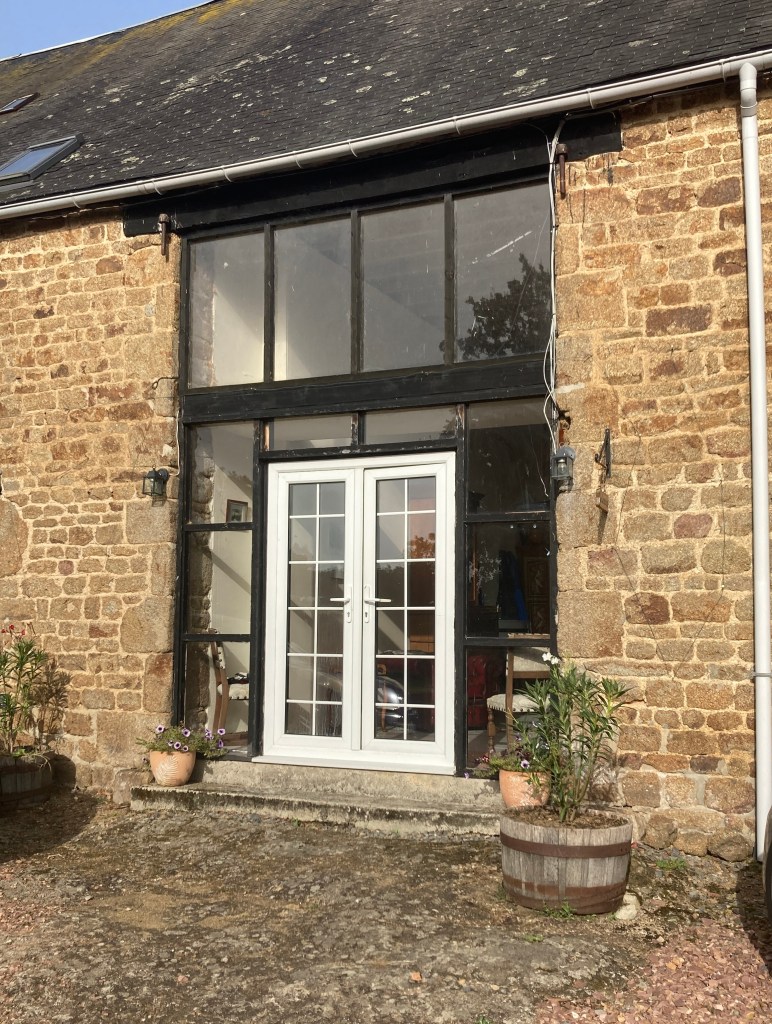
The buildings here are over 230 years old. Though I am not sure of all of the details, the names of the buildings do shed some light on the village’s past. Ours is the Quincaillerie or Hardware Store: others are the post, the school, the bakery, the wine cellar. So it appears this was a tiny village that served the surrounding farms at sometime in its past. Though there have been many upgrades over the years, its rustic heredity still shines through.

We like to watch the British show “A Place In The Sun”. It is about Brits who want to buy a place in France, Spain, Greece, or Portugal. Often the clients look at inexpensive properties, thinking of doing the renovations. These properties are plentiful in France. It is quite easy to find homes for 50,000€, BUT they can be quite derelict, needing a lot of work. Tricia and I comment often about how we hope they know what they are getting themselves in for.

As I write this a contractor is working on the roof. It has been in a bad state of repair since before we moved here, almost eighteen months ago. They started the work a few weeks ago by erecting the scaffolding, then they left. A few weeks later they returned to remove the old roofing, then they left again.

A week or so later they came back for a couple of days and worked on the waterproof fabric and slats. (For readers unfamiliar with this type of construction, just know that it is quite different from what I knew in the US.) Then of course they left, for a couple more weeks. While we waited, there were, bien sûr, torrential rainstorms. Finally, today they are doing a bit of work, we will see how far they go. From what I hear, and read in books written by others, this is just c’est normal here in France.

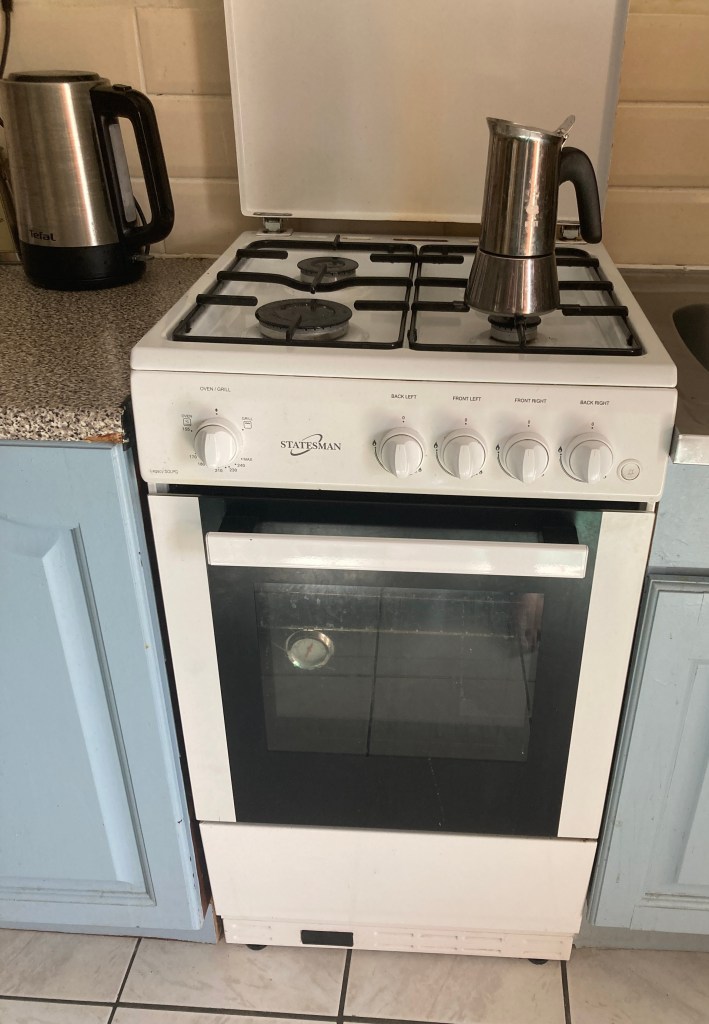
We have other rustic reminders, such as our stove. It is pretty much like you might find in an RV – called a caravan by our Brit friends. Every month or so we have to take our empty butane tank to the Intermarché and exchange it for a full one. The oven pretty much is either hot or not so hot, so we adjust cooking times and watch things like a hawk; simmering is really tricky.
Hot water and showers are always exciting. The hot water heater, which is more accurately called a boiler in British English, because the water gets almost boiling hot, does not have a temperature setting, it is just hot. You must be careful when turning on the water as you can get burned.

Then to add to the excitement, we have really old pipes that are calcified. So while taking a shower, with the water nicely adjusted, the cold water will stop, and only scalding hot water comes out, yes, even if you move the handle all the way to the cold. So with head covered in shampoo, you step aside and wait for the cold to return, then rinse quickly. This is caused because someone in an adjoining unit turns their water on. We have been waiting for almost a year for this to get fixed. We are not sure what the hold up is, or what the solution is.

We have other reminders of our rustic life, like waiting for the cows to be transferred from one field to another, just as we pull off the road, or of chickens crossing the road; both of which are quite entertaining. Of course all of these critters add their own aroma to the air at times.

We have so enjoyed living here, and all of the quirks are just enhancements to what our friend Shirley calls, Notre grande aventure. We do get away to Paris and other cities often, just to remind us that there is civilization out there, yet we are so thankful to have experienced a side of life that many dream of but never get the opportunity to actually embrace.

Some Foods You Surprisingly Might Like

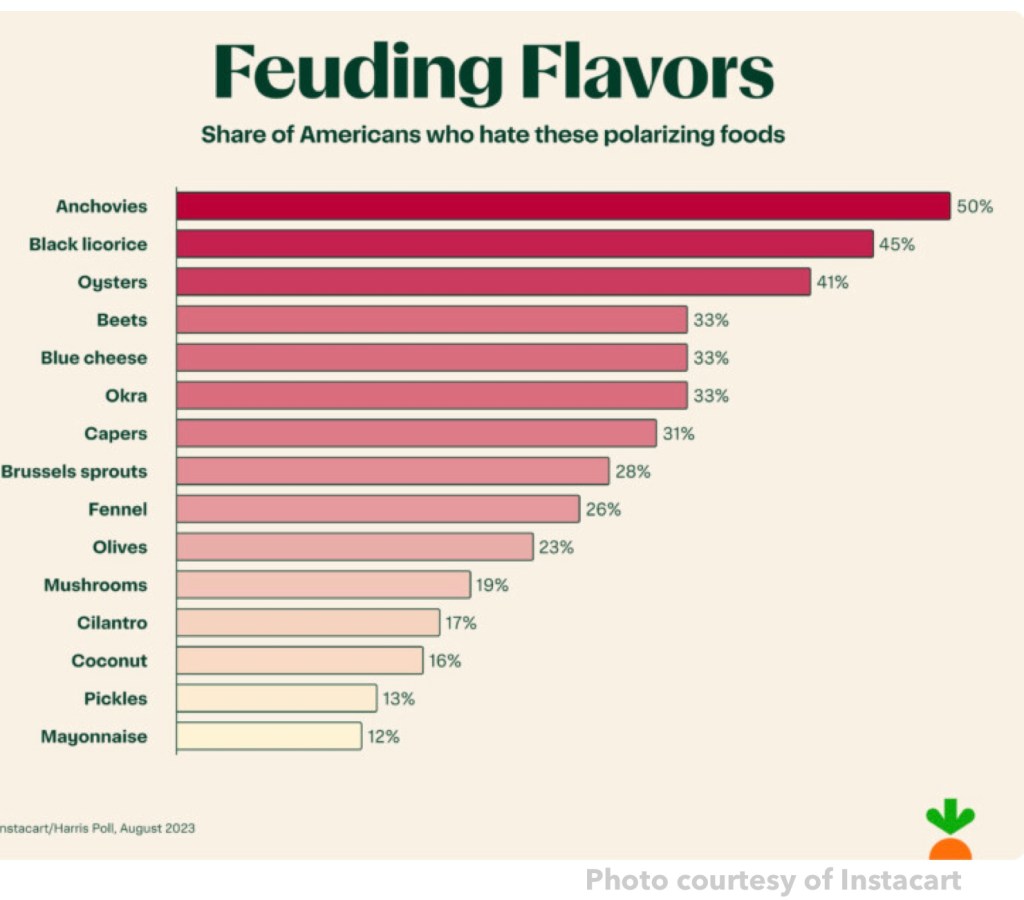
If you follow this blog, you know that my taste in food is pretty broad and some would say adventurous. Most things are not out-of-bounds to me for at least a try. This morning I found this article about the least liked foods in America. It is based on frequency of orders at Instacart. This research would not qualify in a peer based scientific paper, but it is interesting nonetheless. I put the link to their article below the graph, it has some interesting information.

Thanks to Instacart

The first thing to know is that I like all fourteen of these, some more than others for sure, but none of these would be in any “hate” list I would make. Reading through this list I come to the conclusion that it may not be the foods themselves, but how they are prepared, or it might be which kind of the given item you have tried.

In the era that I grew up in, the 50s and 60s, cooking was pretty basic. As a general rule meat was cooked until it was well done, dry and stringy – any pink in the roast was considered life threatening. That style did get me to eat a lot of mashed potatoes, as it was all that would work to get a bite swallowed. Anything in the poultry category terrified moms and dads in those days, so it was likewise cooked to near destruction.

Vegetables were categorically boiled, turning a wonderful stalk of broccoli into some obscene gray paste – I have a friend who is scared for life and cannot be in the same room as broccoli to this day. I would recommend psychological counseling, but I doubt it would help.

So let me shed light on the first five of the items on their list. My conclusions are based on extensive research, well five minutes of internet searching and a lot of years of just eating, so this is iron-clad.

Anchovies

For most Americans their exposure to anchovies is from a flat can. These are packed in oil and quite salty. They are also the basis of Caesar salad dressing, and some use them on pizzas.

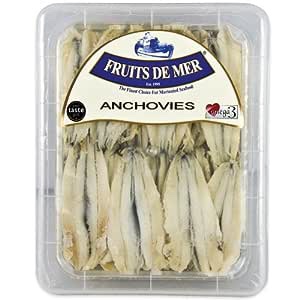
Though I enjoy them straight on a cracker or in a salad, I do get why the strong salty-fishy flavor puts some off. Thankfully for the poor anchovy fish there is more to them than this. Here is what the fish looks like – cute little things. They range from 2 to 40cm, and there are more than 140 species.

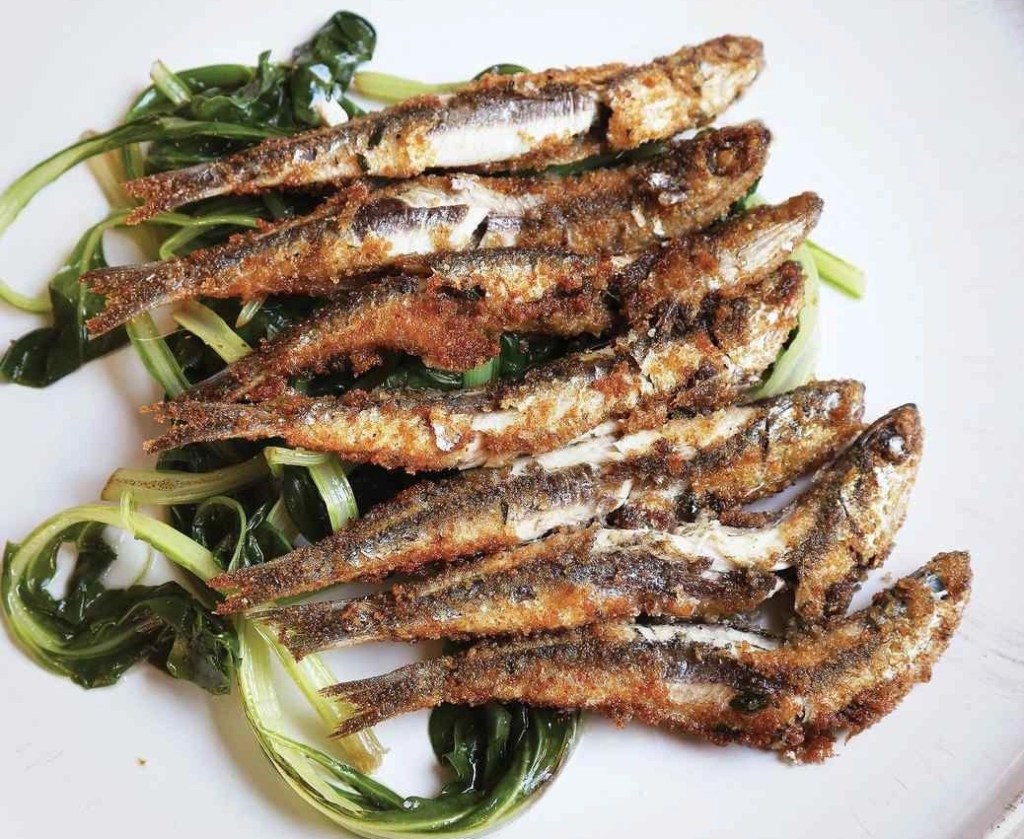
It is common here in Europe to see them fried or grilled as in the photo. White anchovies are common around the Mediterranean, none of the salty fish flavor of the canned. They make a wonderful appetizer.

Black Licorice

In my childhood red or black rope licorice was sold from a jar by the stick, usually for a penny, which made it a popular item, even though it was usually pretty dried out. Today, moister ropes are available, and Australian licorice is a treat – it is soft and chewy. According to Livestrong.com licorice in moderation is a good sweet snack, far superior to most other candies.

Oysters

Of the top five on the list I can see this as the challenge for many people. For me, the best way to eat an oyster is raw on the shell, but I understand the squeamishness of some people – live, raw, and the texture. But that is not the only way to eat an oyster. Roasted in breadcrumbs as in Oyster Rockefeller, or in a chowder are quite different experiences. Even raw there are a variety of flavors, from mild to quite metallic. In Louisiana an oyster po’boy is a real treat.

Beets

There was a time in my life when I said that the only mistake God ever made was inventing beets. Over time I have learned that was based on my exposure to over-boiled muck.

First off learning that there are more than just red beets was an eye opener. Golden beets are quite a different taste, and roasted they are one of my favorites these days. Pickled red beets are pretty good in a salad; of course pickeling most anything makes it better. Mama Melina’s in Seattle makes a beet, walnut, and gorganzola salad that is quite good.

In addition to some actually great flavors, beets are anti-inflammatory, build up your immune system, good for your complexion, and boost energy, just to name a few of the benefits.

So like all of the others so far, our reaction is often tied to childhood experiences, and to a limited experience with varieties or preparations. Maybe you should do what I have done and give beets a second chance.

Blue Cheese

This would include Roquefort, the king of blue cheeses, gorgonzola, and a plethora of other cheeses with the distinctive blue mold. Only cheese from the region of Roquefort in France can use the name, all others are a form of blue cheese.

Blue cheeses vary in taste from very mild to strong, and from slightly sweet to salty or sharp; in colour from pale to dark; and in consistency from liquid or very soft to firm or hard.

Wikipedia

I love most any blue cheese, but if you aren’t a fan, maybe it is because you havent found the one you do like. The best salads have blue cheese crumbles sprinkled in, with a nice red-wine vinaigrette.

The rest of the items on the list might just surprise some people. Roasted Brussels sprouts are quite different from boiled, fried okra is not stringy, It is rare that Tricia and I boil anything, it takes out the flavors. Try steaming, or roasting instead, the results will be quite different and always better for you than boing out all the nutrition and flavor.

It is 11.00am as I write this, I am so glad it is getting close to lunchtime, all this thinking about food makes me hungry.

Birthday in Honfleur

Last Friday, 18 August, was my birthday – don’t even think of asking how old. We planned a trip to Honfleur. This was a dual-purposed journey – celebrate another trip around the sun and a dentist appointment in neighboring La Havre. Before you send sympathy comments regarding a dentist visit and joyeux anniversaire, remember that we are foodies and teeth are tools of the trade, so it was all good.

The dentist was on Monday, just before we drove home. Our dentist spoke some English, and we some French, so it went quite well. We both really like her. The dental office and procedure was similar, yet different, than in the US – it seemed more casual, which I liked. She repaired a filling of mine, part of which fell out while we were in Reykjavik. No anesthetic was needed. Now to the important stuff.

Honfleur is a port town on the mouth of the Seine. The heart of the city is built around a small harbor. It is a city for food folks, especially if you like seafood as much as we do.

Friday we ate lunch, our main meal of the day, at Restaurant Le Sainte Catherine. Tricia, ever alert for things I like, spotted grilled sardines on the chalkboard, so the search was over. Sitting at a table next to the harbor was a bonus. Sadly, I was so in a rush to eat them I did not take a photo.

One friend already commented that sardines did not seem like a very good birthday meal. If your only exposure to this wonderful fish is the small, flat cans that you see in most grocery stores, I can understand. As an aside, seafood in those cans is quite different in Europe. There are stores that specialize in canned seafood, and it is all amazing.

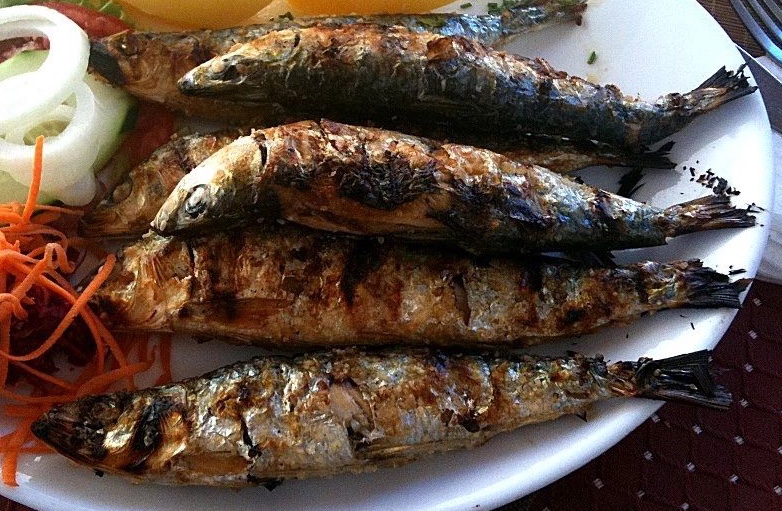
Sardines are plentiful in any poissonnerie here in France. They are between six and eight inches long, sold cleaned, with the head on. The most common preparation is grilling, until the skin is browned, and best when over charcoal. To eat you cut across at the tail, then peel the top half toward the head, leaving the bones behind. Then the bones and head are easily discarded, leaving you with a delightful fillet. Here is a stock photo from the internet of how the sardines look.

On Saturday we visited Sainte Catherine’s church, the largest wooden church in Europe, and composer Erik Satie’s museum. Watch Tricia’s blogs for a post in the near future about this eccentric fellow.

Churches and museums work up quite an appetite, so it was time for lunch. We found a table right on a pedestrian street at Homme De Bois. We shared raw oysters for an entree. Langoustines, along with lobster, are never high on my list, but I decided to give the langoustines a go, and it was well worth it.

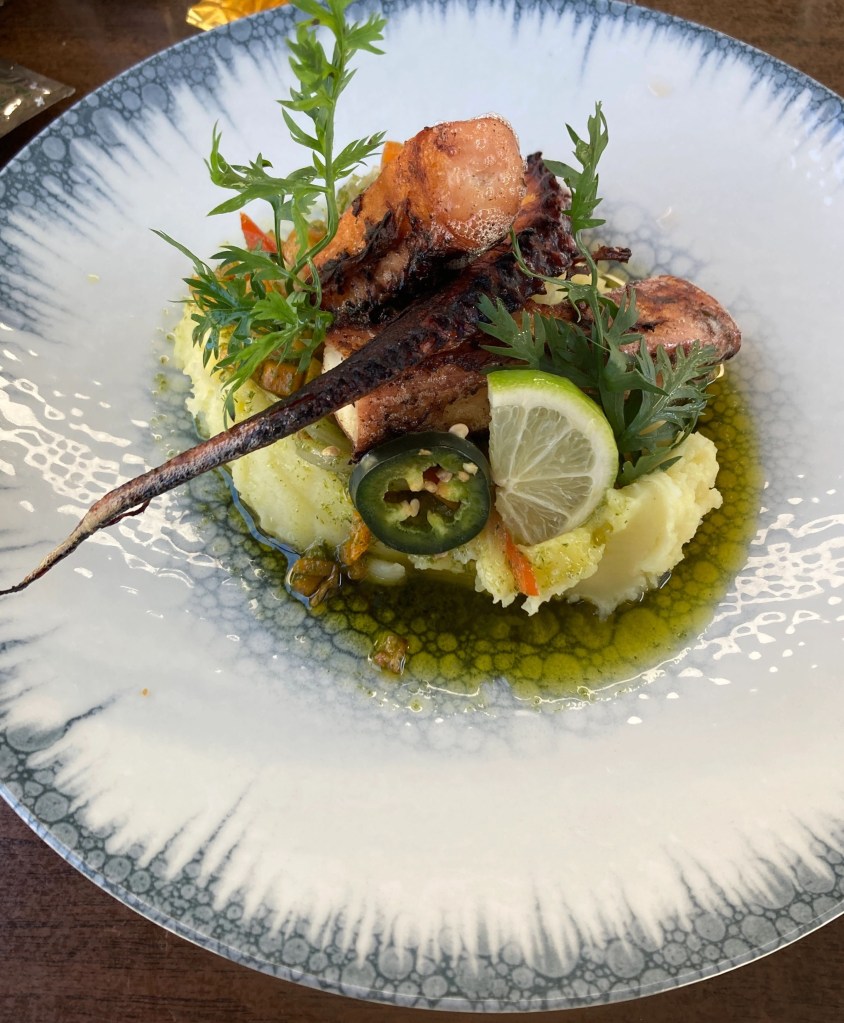
Sunday we wandered through a couple of parks, then headed for lunch back near the water – Cote Resto. After another plate of oysters, I had grilled octopus. Octopus is a delicate thing to cook just right, you want it charred, but if it is cooked too long it gets rubbery. This one was perfect.

Yesterday we drove home, about a two-hour drive. For lunch, we stopped at one of our favorite French amenities, the aire de repos. These wayside stops are placed every 20-40 kilometers on the Autoroutes, so you do not have to leave the toll road for gas, food, or a break. Since it is France, coffee is available either from machines (yes plural, lots of machines) or from a counter complete with enough baked items to make many boulangeries proud. But our choice is usually a packaged chicken salad sandwich, and if we are feeling decadent a bag of chips. It is a simple fare, but quite enjoyable as we head out down the 130k/hour Autoroute for home.

It was a memorable weekend. Fortunately the dentist found a small cavity, so we will get to go back for a day or so at the end of October. Oh darn.

Bonjour – So Much More Than Hello

Last week Tricia and I were walking near the lake in the park at Ceaucé. We turned a corner and just ahead there was a group of four or five kids, between six and twelve years old. They were doing what kids do, calling out to the small black sheep behind the fence. As we approached and were passing them, they all, each one, said, “Bonjour Messieurs-dames.” Yes, for all you grammar checkers, that I keep so busy, it IS all run together as one word. It is a common shorthand for “Bonjour Monsieur, Bonjour Madame,” We hear it often when Tricia and I are out and about.

Photo from Tricia

In France when you enter someone’s space “Bonjour!” is expected. Bonjour, is so much more than hello, which would be “salute,” which is far to casual for the first contact with a person. We have been in a restaurant when the hostess is seating someone and they pass near our table, they offer a “bonjour” as a recognition of entering our space, which we return to acknowledge them. When entering a shop a “bonjour” is offered, and a return bonjour is expected. Unaware visitors often wonder why they are not receiving the “service” they want, well it is because they have ignored one of the most basic of social niceties in France, the bonjour. It is considered rude to not offer a bonjour.

These children already knew and practiced the social custom, with perfection. In France, a child is taught how to behave in the society they live in. They learn this along with other French norms of talking quietly in restaurants and waiting patiently in lines.

One of the things I like about Europe is the sense of community. Certainly that includes the concept that a person’s individual desires may need to be toned down a bit in order to serve the community. That sense of community also includes common curtesies that show respect for others.

I remember, in my seminar days, doing seminars that included a section on etiquette – I also remember being asked why it mattered. The answer: our manners show our respect for others, they show our understanding and awareness of our community.

David Brooks wrote a recent article for “The Atlantic” titled, “How America Got Mean.” He wrote, The most important story about why Americans have become sad and alienated and rude, I believe, is also the simplest: We inhabit a society in which people are no longer trained in how to treat others with kindness and consideration.

The French respect their culture and tradition, they pass it down to their children. Recently there were some protests and uprisings in a few cities, over an issue that made the protests logical and somewhat justified. Macron, the Prime Minister, appealed to the parents to talk to their teens. My point here is not to endorse or condem the protests, but the expectation that parents are to pass on the decorum that is expected in the French society.

These days when we watch the news in the USA we are saddened by the lack of civility. The Senate uses words like, “The Gentleman, or Gentellady,” yet it is only empty words, in the next breath they viciously attack each other with childish names and accusations.

There was a time in our culture when people with differing positions were respectful to each other. Republican President Ronald Reagan and Democratic Speaker Tip O’Neil would get together regularly, and informally, to chat about issues over a glass of Scotch. They agreed on few issues in those days, but they handled it with decorum.

With all of its imperfections, I appreciate the civility that many cultures practice. We saw it in Japan and we see it in France. We may disagree, yet we still owe each other the decency of being joint members of our community.

La Baguette and Family Secrets

We have been hiding a family secret since July of 2007 – 16 years. Now, living in France, it is time to come clean. We – Alexis, Tricia, et moi – visited Paris, along with my dad and stepmother in 2007. Tricia had a great idea for a Christmas card photo for that year.

My dad took this photo. The three of us in a perfect stereotypical French pose – baguettes and the Eiffel Tower. Note carefully the three baguettes, specifically the paper around them. Note that Alexis’s is different. (Also notice her Pichard looking red bag.)

We bought the baguettes on the way to the Tower. Like many French people would do, Alexis broke off le crouton or le quignon (depending on which part of France you are in) and began to eat. It is the first end of the baguette and considered a delicacy.

She ate the first bite, then a second, and a third, and … Well by the time we got ready for the photo-shoot she only had about six inches of the Baguette left. I understand completely, yesterday I bought a baguette, which I proceeded to eat, with Tricia’s help, until it was about half gone.

So when we finally were ready to take the photo, Alexis had to hold her mostly empty bag, with just the remaining tip protruding, not a whole baguette, as the picture portrays. So now you know the whole story.

In France there are four essentials for living: Une baguette, du vin, du fromage, et un café – bread, wine, cheese, and coffee.

In a small village like Ceaucé, our nearest village, you can always find a baguette in the early morning. If the boulangerie is closed, there will be a sign in front of the small convenience store that they have bread. Yesterday they were both closed, so the sign was in front of the charcuterie. A charcuterie is a meat and sausage market, but behind the counter was a large bundle of baguettes. They only cost 1.05€, regulated by a government that believes essentials should be protected. She handed me my baguette, which, in true French fashion, had no wrapping of any sort, just a delightfully crusty baguette. Folks in the USA would cringe, but the French think we are too fussy about such things.

Wine in France is also quite affordable, a nice Cote de Rhône will cost around 4€, it would be $15-20 in the US. I get wonderful Camembert rounds, from right here in Normandie, for 2-4€. So for under 10€ a person can eat quite well, with room left over for un café at a local café.

My friend Shirley, will most likely tell me I left out croissants, but for the French, croissants are more of treat than an essential, but like Shirley I could easily add them to the list. And the French do adore their croissants.

One of the concepts that I like about France is that the essentials for quality of life are quite simple. That is a lesson I hope to keep from our time here in France. Tricia likes the statement La vie est belle, and I think the simpler you make it the better it is, thank you France for the education.

I like Europe – A Lot

I like Europe. I particularly like France. Since moving to France over sixteen months ago, we have had the opportunity to visit twelve European countries, a few of them we had already visited at least once before we moved here – that is more than I ever dreamed I would get to see. If you take all of our European travel over the years we have been to fourteen countries in Europe.

The first conclusion is that I really like Europe, or at least Western Europe. The next conclusion is that I like France the best. With all of its paperwork, penchant for complaining, and unpredictability, it is still my favorite.

Just a week ago we drove back from spending time with Tricia’s sister in eastern France and Switzerland. Tricia was taking a nap as we cruised along the A11 at 130K. My thoughts pondered, what is it about Europe that I like so much?

When I visualize most anyplace in Europe it is cafes, cathedrals and castles, and a communal mindset that comes to mind.

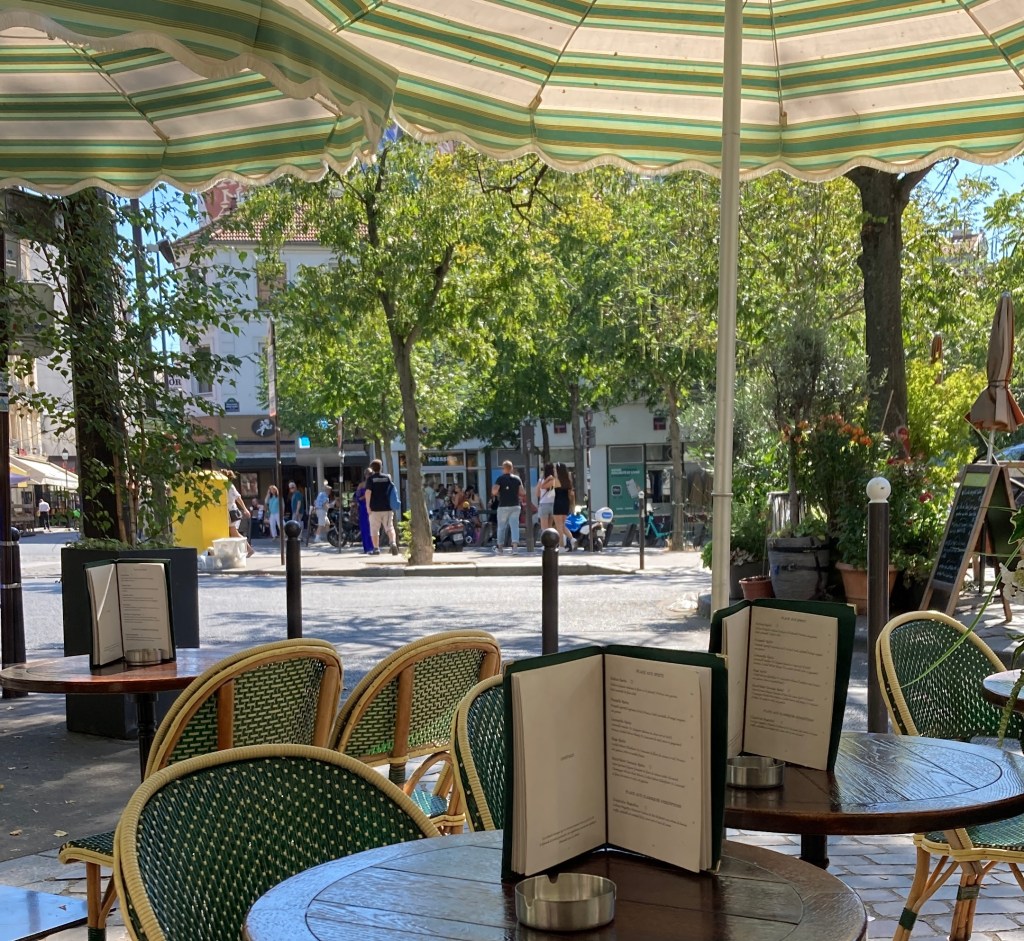
One of the most striking features of Europe, and of course France, is the plethora of cafes and restaurants, most of which have outdoor seating. Al fresco, or en plien air, is the norm here. In Europe, the first choice is sitting outdoors for coffee, eating, and hanging out. The time of the year makes little difference. In the dead of winter, folks sit outside with un cafe or a glass of wine chatting with their friends.

The cafe culture, which France is famous for, is more about people than what is consumed. People watching is an ubiquitous pastime here. In most cafes, the chairs face the street so you can watch the people parading by. There is no rush at a cafe, and you will never have a server indicating that they need the table – a 2€ un café entitles you to sit at the table for as long as you like. The cafe scene, just hanging out over a cafe, is something that most of the population takes part in regardless of status or age – cafes, en plien air cafes, are in the very fabric of peoples lives and outlook on life. It is a time to slow down to experience la joie de vivre. I like it a lot.

Another striking feature in Europe are the buildings, especially the churches, chateaus, and castles. Every city or, in a large city, like Paris, neighborhood, has a central area with an old church. Usually the weekly market is nearby, often a castle on a hill overlooks the whole scene.

It is quite clear that this is an old culture which people are quite keen to embrace. One of my favorite scenes from the movie LA Story is when Steve Martin is giving a tour of the city and he says with incredulity, “Some of these houses are twenty years old!” We live in a house that is over 230 years old and we are surrounded by houses just as old. A twenty minute drive from here we can eat at a restaurant that sits in the shadow of Chateau de Domfront, over 1000 years old.
Joni Mitchell got it right when she sang, “They paved paradise and put up a parking lot.” In the US we tear down buildings. In Europe they update the building while valuing its history. In Europe, there is a connection to history which gives a different perspective on the future than if society is just focused on the next new thing.

The communal attitude of Europe and France stands out as well – public transportation and healthcare are two of the best examples. Trains and subways make it quite easy for many folks to never own or really need a car. Bicycles are common all over Europe, as are motor scooters. What is rare are large SUVs and trucks.

Healthcare is seen as a public necessity, not something connected with a job or only for the well-off financially. Yes, it has its frustrations, to expect otherwise would not be realistic. It is comforting to know that the societies of Europe are willing to pay a bit more in tax for the benefit of the community.

Individualism is quite acceptable here, and there is acceptance of live and let live. There is less of the attitude that has grown so divisive in the US where one group feels the need to intrude on the lives of other people’s lifestyles, lifestyles that most often have nothing to do with them. The US claims a separation of church and state, yet the church today wants to impose its beliefs on everyone. France is officially secular, which does not mean anti-religion. What it does mean is that you are allowed to practice your religion and just let me practice mine. (Sadly, recently this is being tested by far-right groups wanting to oppress some races and religions.)

Europe is not perfect, and like a good Frenchman I can complain with the best of them about the bureaucracy, the frequent waiting, or that we still have 3G phone service half the time. Yet, I like it here. There are a few places I know in the US that are close, like the part of Portland where our friends live, and a few pockets in Seattle, so if/when we return to the US we will need to seek out such a place. But, in the meantime, I will enjoy France.
Next week I will explore why I like France the best.

Basel Ticked All the Boxes

Basel was our first introduction to Switzerland, and what a pleasant place to start. Stereotypes of mountside cottages with goats and cows ringing their bells would have to wait, Basel is a big city.

Bicycles and pedestrians rule, crossing and swerving with no rhyme nor reason. Driving our car was a two person job – I watched the street and listened to the GPS directions, Tricia watched for pedestrians ready to step out in front of the car with no warning, or cyclists coming up on my right as I was starting to turn. Once our Dacia was tucked safely away in the underground City Parking we joined the chaos on foot.

My mornings started at the Confiserie Bachmann on Blumenrain street, next to the Rhine River. One lesson from our European travels is how coffee differs from region to region. I know how to order in France – un cafe, un double, un café crème, une noisette. In other countries it is not always the same.

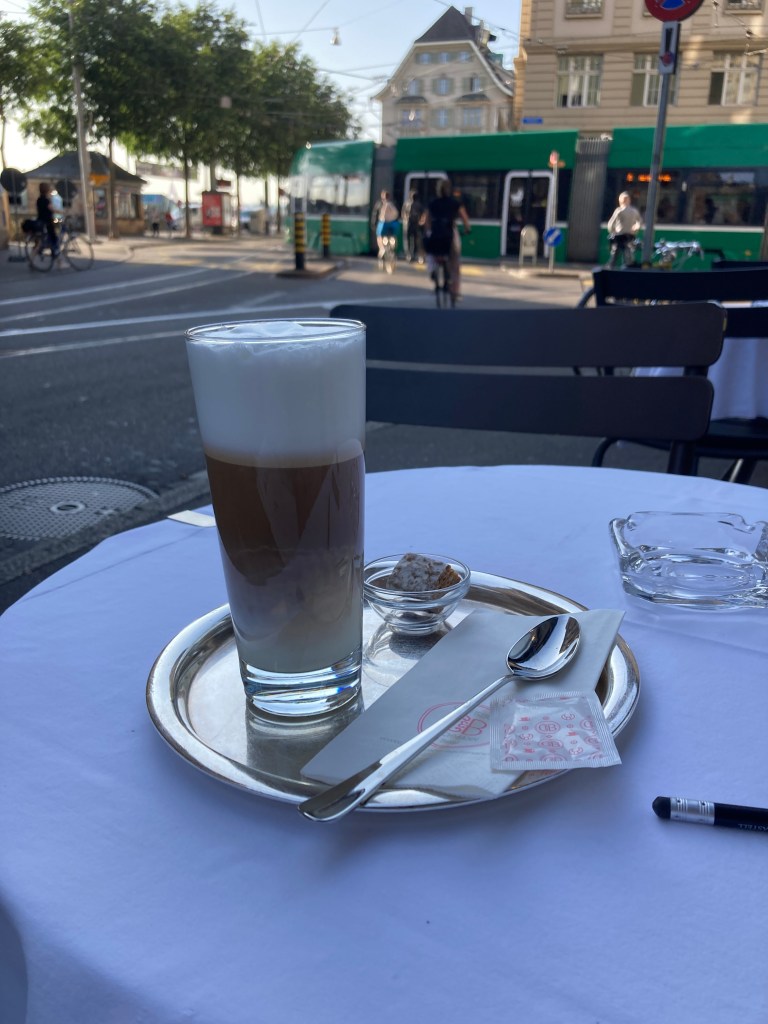
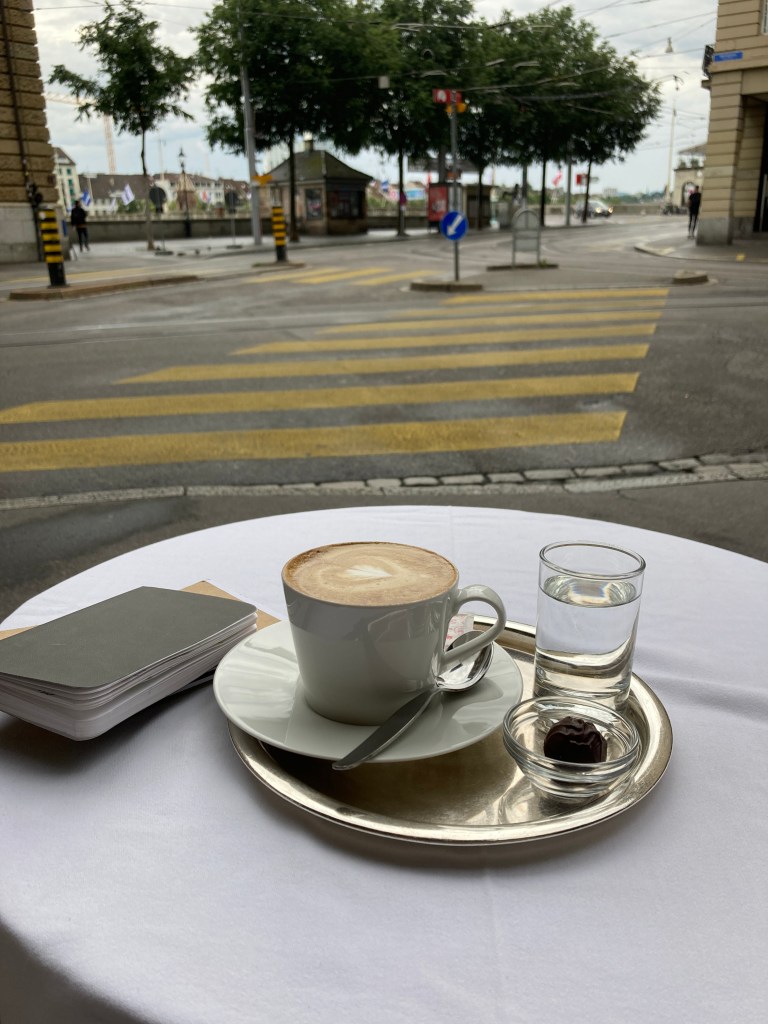
My first morning I ordered a latte with an extra shot, I dislike most American lattes because all you get is coffee flavored hot milk, so at Starbucks I always add an extra shot or two of espresso so as to be able to taste the coffee – thankfully caffeine has never had any effect on me. Look at what the server brought me in Basel – on a tray, nice serviette, small glass of water, a small baked nibble, and the coffee beautifully layered in a tall clear glass. This is why I like coffee in Europe, no paper cup with a plastic lid.

The next morning I asked for a cappuccino. Thankfully many of the better coffee shops in Seattle serve them just as well, though, with the exception of one shop I know of in Mill Creek, the water and the tray are missing.

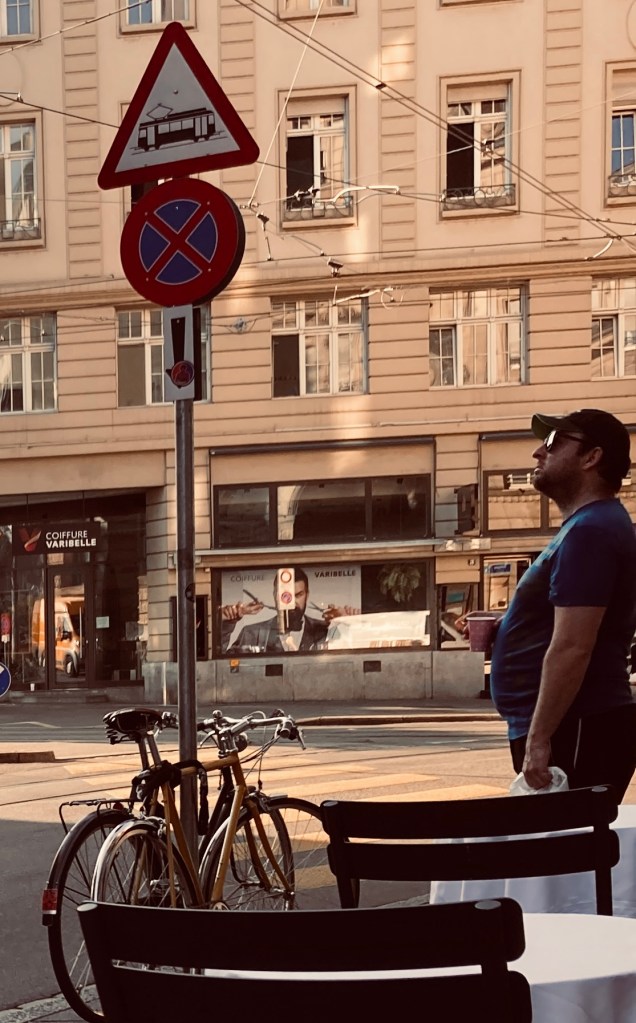
Tricia is the travel photographer in the family, she posts her enticing work on her blog site, Travels Through My Lens. However, while in Basel, I was drawn to people in doorways and on the streets that got me to wondering what they were thinking or feeling.

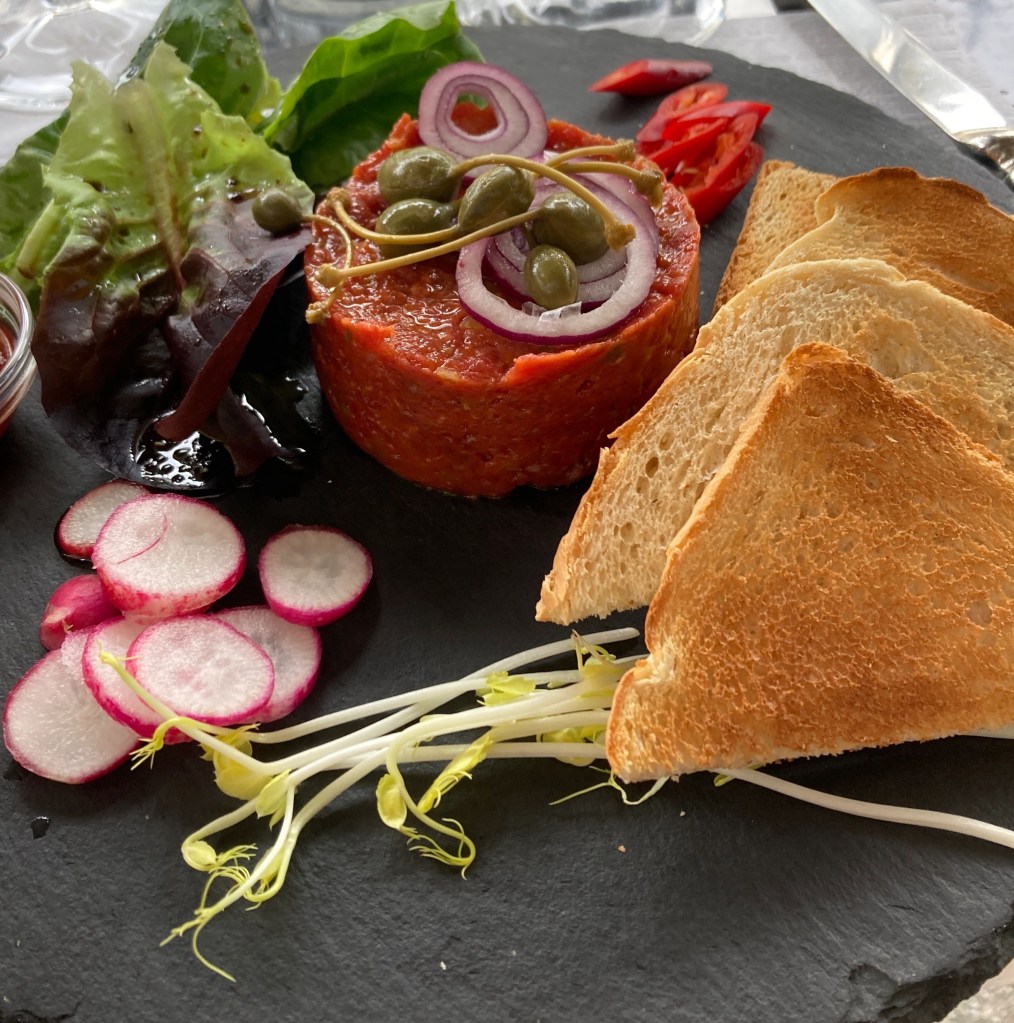
The food in Basel was equally impressive. One meal that stands out was this spicy steak tartar at ONO Deli Café Bar. It tasted just as good as it looks; when it is done right, food can be such a joy.

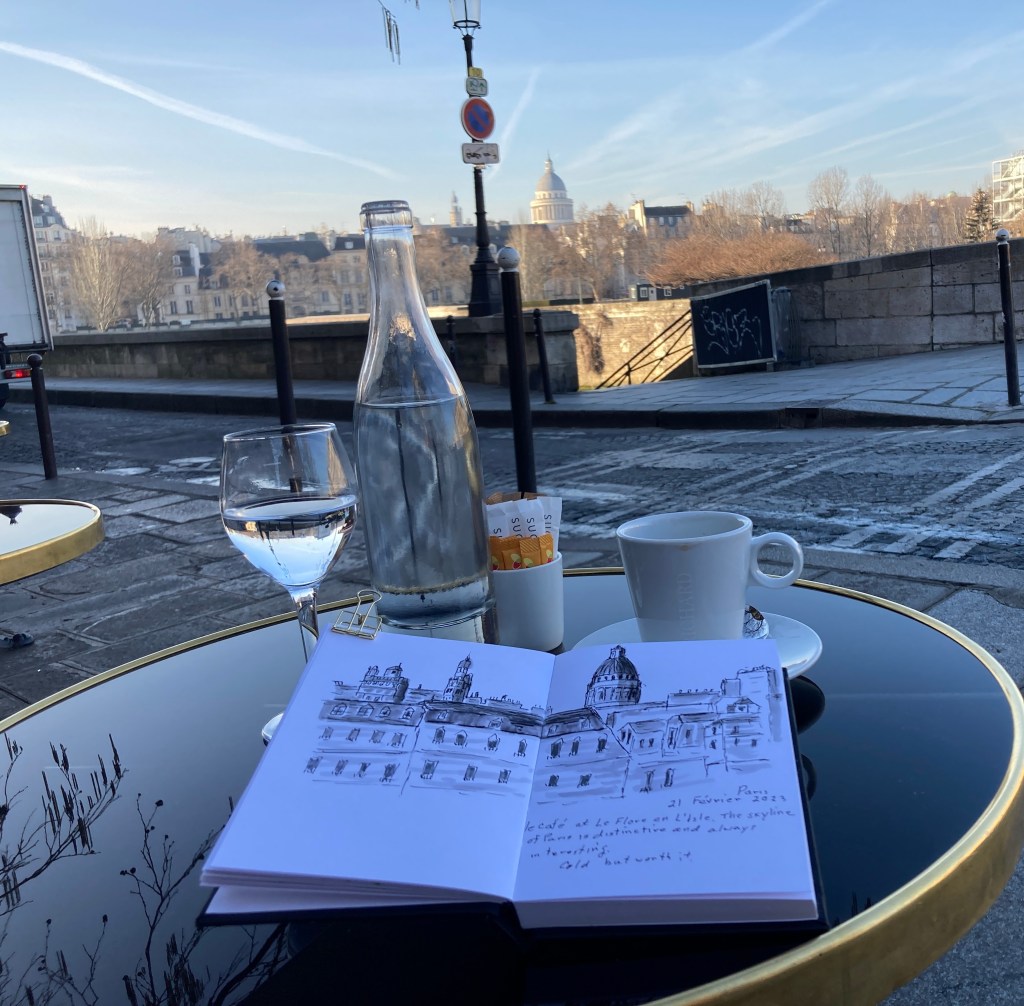
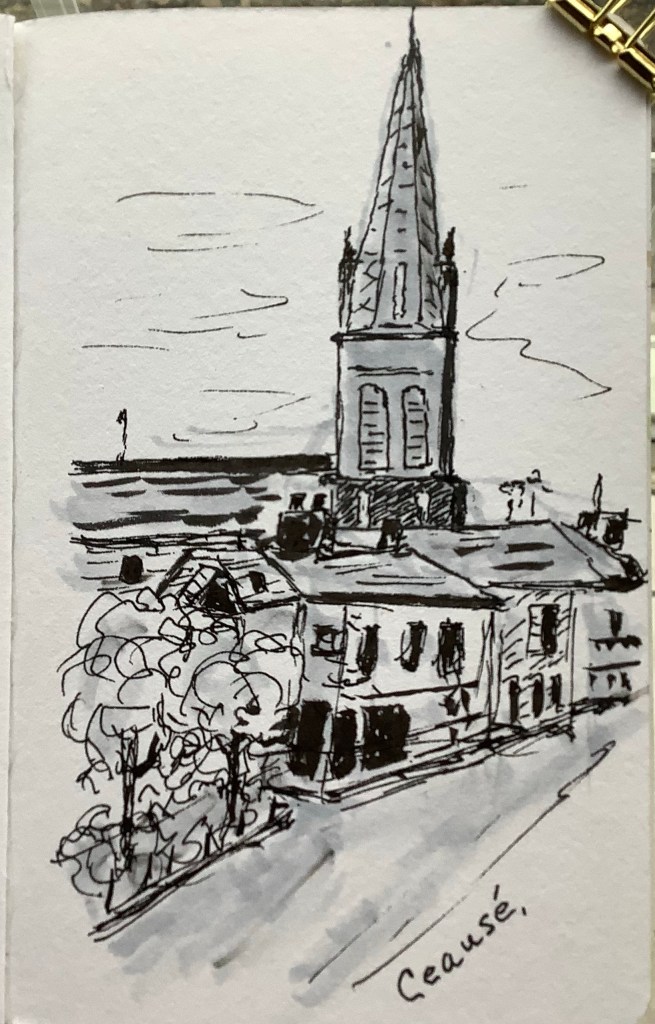
Our Brit friends have a phrase, “It ticked all the boxes.” Basel ticked all of my boxes: morning coffee while observing the city and sketching, people to watch, and excellent food to share with Tricia en plein air. As Bob Hope sang, “Thanks for the memories…”

Alsace/Lorraine – A Long Way From Longyearbyen

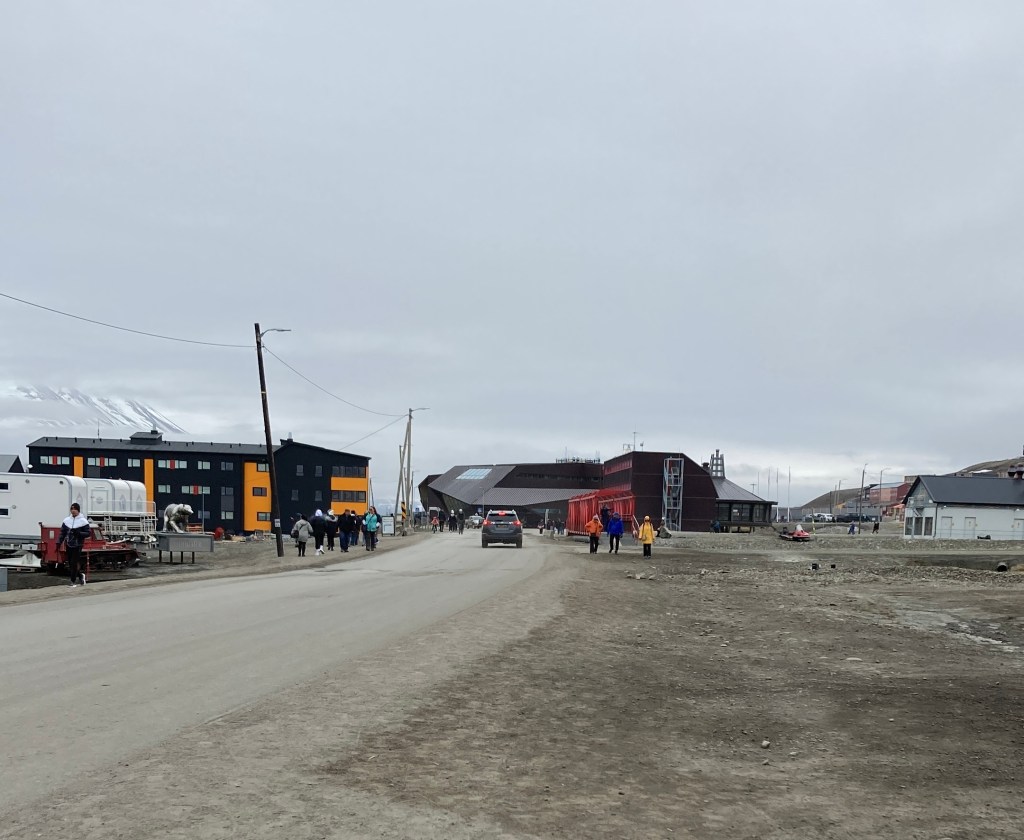
We are in Lesseux in the far east of France. The proximity to Germany and Switzerland is evident in the architecture. We are a long way from Normandie with its resemblance to southern England. We are even further from Longyearbyen, where we were just over two weeks ago.

Longyearbyen was 78N latitude, here it is 48N. The sun will not set today in Longyearbyen, but today it will set here at 2134 and come up again 0538 tomorrow morning. It is 74F in the evening here, it is 55F in Longyearbyen.

Eastern France is a world away from the far north. It reminds us of the Pacific North West, green forests and hills. It has architecture from another century. Longyearbyen’s structures are utilitarian.

My granny, my dad’s mom, was a woman ahead of her time. A single mom in the 30s and 40s, a master tailor, a executive assistant – when they were still called a secretary. On Sundays she and I teamed up against dad in a game of chess, and she was a vicious croquet player. She would have loved to travel, but she did very little.

Granny had a subscription to National Geographic. We would sit on the couch and dream of far away lands. I remember spending many hours looking at a thick book she had with black and white photographs of places around the word. In her imagination Granny was a world traveler – maybe that is where I got it from.

Thankfully, Tricia and I share a bit of wanderlust, and we travel well together. We have a rhythm that works well and we like similar things. Granny never met Tricia, but I know she would have liked her as much as I did.

I suppose the day will come when we don’t travel as often, and that will be just fine – quiet days have their own attraction. But for now we have a few more plans on the horizon, and we will enjoy each one. We have been blessed with a lifetime of travel – our life is the trip of a lifetime.

When that day comes, and we slow down a bit, it will be just right. For there is another thing we have learned, the days of a quiet routine are just fine. Cooking together, working on our photos and art, seeing friends and family, these will all be quite satisfying. In the end, each day is what you make of it, that is our plan. Thank you granny for planting the desire to travel, and for living each day well.

Cruise Dining, Part II

We have four days left on our third cruise. This time it is on the Norwegian Star from Tromsø ending up in Iceland by way of Longyearbyen, the northernmost inhabited village.

The Star had a few of the same restaurants we saw on the other ships – an Irish Pub, Le Bistro, La Cucina, and of course the Garden Cafe.

The Garden Cafe continues to be avoided if at all possible. As I said in my last blog about food on our cruises, the buffet food is not bad, it is just not very good. Well except for the one time on the Sun when I thought biscuits and gravy for breakfast sounded indulgent. If I could have cut or bitten through the biscuit it just might have been a treat, even the gravy did not soften their impenetrable shell, they were bad.

Yet, more than the mediocre food, it is the crowd. On this cruise, I have been there at 0600, 0700, 1000, once or twice to actually eat something, usually just passing through, grabbing a cup of coffee, then heading for the bow to watch the ship come into port. The buffet is always a chaotic crowd, and both Tricia and I have observed that they are aggressive; God forbid you get between them and their bacon. We have been pushed and shoved multiple times. Tricia had one guy forcibly tell her, “get out of my way.”

In defense and fairness the made-to-order omelets and the deserts are actually quite good, but they are not worth the crowd hassle for me. And then there is my lifelong dislike of buffets.

I would rather eat at a sit-down restaurant with a view and take my time. Of the restaurants on the Star that is included in your basic package, The Versailles is our favorite. One evening we had this view and I had this for my entree.

Even though we were not next to the window, as we usually are because we get there early, we had a nice view of the water. My sea bass was cooked just right. The server remembered us and we chatted about her home country. Sure beats the rumble and tumble of the buffet line, and the cramped tables that would do a school caffateria proud.

On this ship the Asian restaurant is included, which has been a treat, complete with hot saki. For a few dollars more I had unagi sushi for an appetizer.

We always buy the food upgrade that includes two meals at the Ala Carte places. We used our first at La Cocina. A good Italian meal for sure, but the best part was Hazel, the wine steward. She was so much fun, and we connected. Since the staff work at multiple locations around the ship we see her often and she is always greets us enthusiastically.

Our second reservation will be on our second to last night on the ship, at Cagney’s. Cagney’s is a fixture on most Norwegian ships, but we have avoided going to this most popular of the restaurants since we don’t go to steak houses, and we live in France where steak is c’est normal.

I took too long to write this, so we had no choice but to go to the buffet. We dodged the people, and tried to ignore the noise. I decided to have pancakes, not something I have often, but what the heck. Tricia got her plate, I got mine then we looked for an empty table. Five minutes later we found one, conveniently located so the traffic went by on both sides just inches from our seats. At one point, I warned Tricia because a man was standing there gazing around, probably looking for a table, while holding his plate about six inches from her head. By the time we found a place to sit, my pancakes were cold. My views on buffets remain unchanged.

Chez Moi, Often the Best Place in Town

Often the best eatery is Chez Moi, our place. As much as we love eating out, some of our best meals are when we cook. We never have those discussions some people have about whose turn it is to cook or do the dishes. We both love to cook and neither of us mind the dishes.

Recently, after watching an episode of Ina Garten, I adapted one of her dishes for us, shrimp with fennel. I would never have dreamt of pairing shrimp and fennel, but wow, it was amazing.

I sautéed diced fennel in olive oil with a bit of garlic and red pepper flakes. Then sautéed the peeled shrimp, added a splash of French sparkling wine, and a handful of parsley from our garden. To quote Ina, “How easy is that?” Then served it with fresh, local, brocoli that was steamed and topped with a bit of butter and salt.

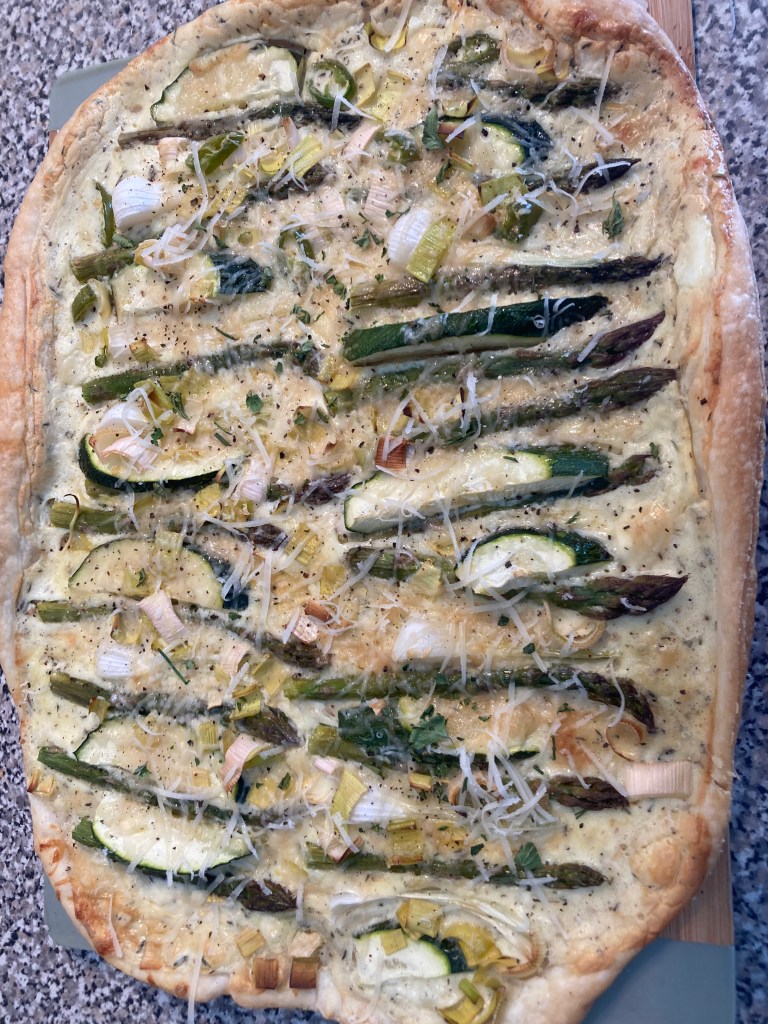
Spring means asparagus, We don’t eat asparagus the rest of the year because it is just not worth eating; fresh local asparagus is such a treat. At the risk of offending my French friends, I do proclaim that Washington, USA grown asparagus is superior, but the stalks from France are quite nice.

One of the wonderful conveniences at the Supermarché are the premade doughs and crusts. They come in a package rolled around paper. To use you simply unroll the dough onto your baking sheet and you are set. For this tart I used puff pastry dough.

The first layer was crème fraîche. Then asparagus, leek, and sliced zucchini. It was seasoned with a bit of salt and red pepper flakes. (Yes, I do put a bit of red pepper flakes on most everything. Not enough to make it spicy, but even a bit enhances the flavor better than black pepper.) I topped it off with grated Parmesan cheese and baked.

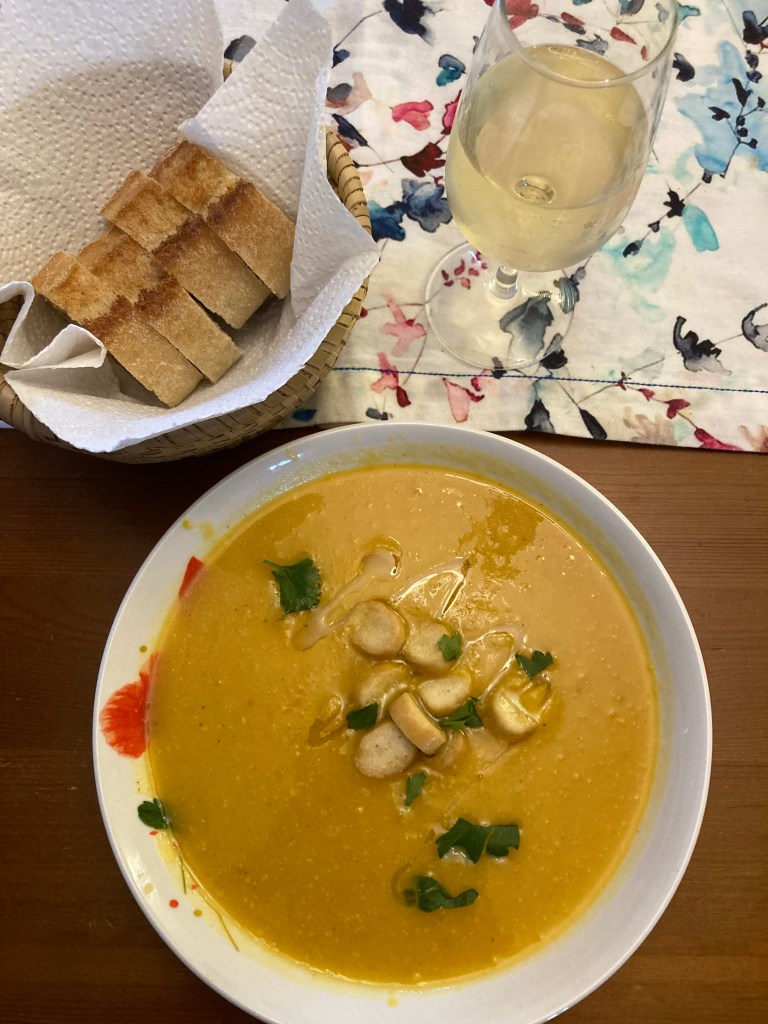
In March 2022 we were in Paris on our way home from Faro, Portugal. We stayed for a few days at a newer hotel in the Montparnasse area, The Drawing House. A great place to stay if you want to try something with a real art vibe. It was late so we just ate in the hotel. Tricia had curried squash soup, which inspired her to do her own version at Chez Moi.

She topped it with mini-croutons, and a drizzle of olive oil. From my totally biased objectivity it was better than at the restaurant. Some slices of baguette and a glass of vin blanc made the perfect meal.

Cooking and eating has been an integral part of our life for as long as I remember. It is our hobby. Food brings us joy, which, when we get the opportunity, we love to share with friends and family.