Some Things About France I Would Miss

If we ever left France and returned to the USA, which would not be a bad thing since we love the PNW, there would be things I would miss. Here are just a few that come to mind.

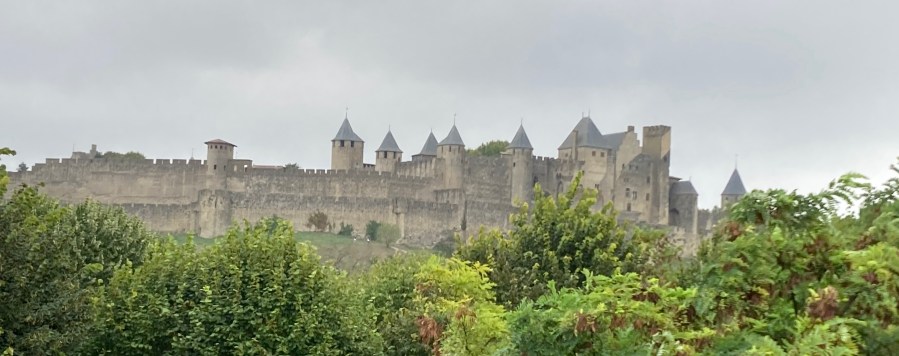
When we first moved to France we spent a lot of time visiting châteaux and old churches in the area. However, after seeing a bunch of châteaux they do tend to all look alike. After a few months we just quit looking for new ones to visit. We do still visit churches whenever we can, but that is for more than the architecture, there is a spiritual element going on there. Yet I would miss living in a country where views like this, the citadel of Carcassonne, are the norm, not the exception.

We drive through village after village, each one is postcard-worthy, but, here in France it is the normal ambiance, the terroir of the place, and I love it. I would miss living in a place where old buildings are a common site, not torn down to “put up a parking lot.” (Joni MItchell)
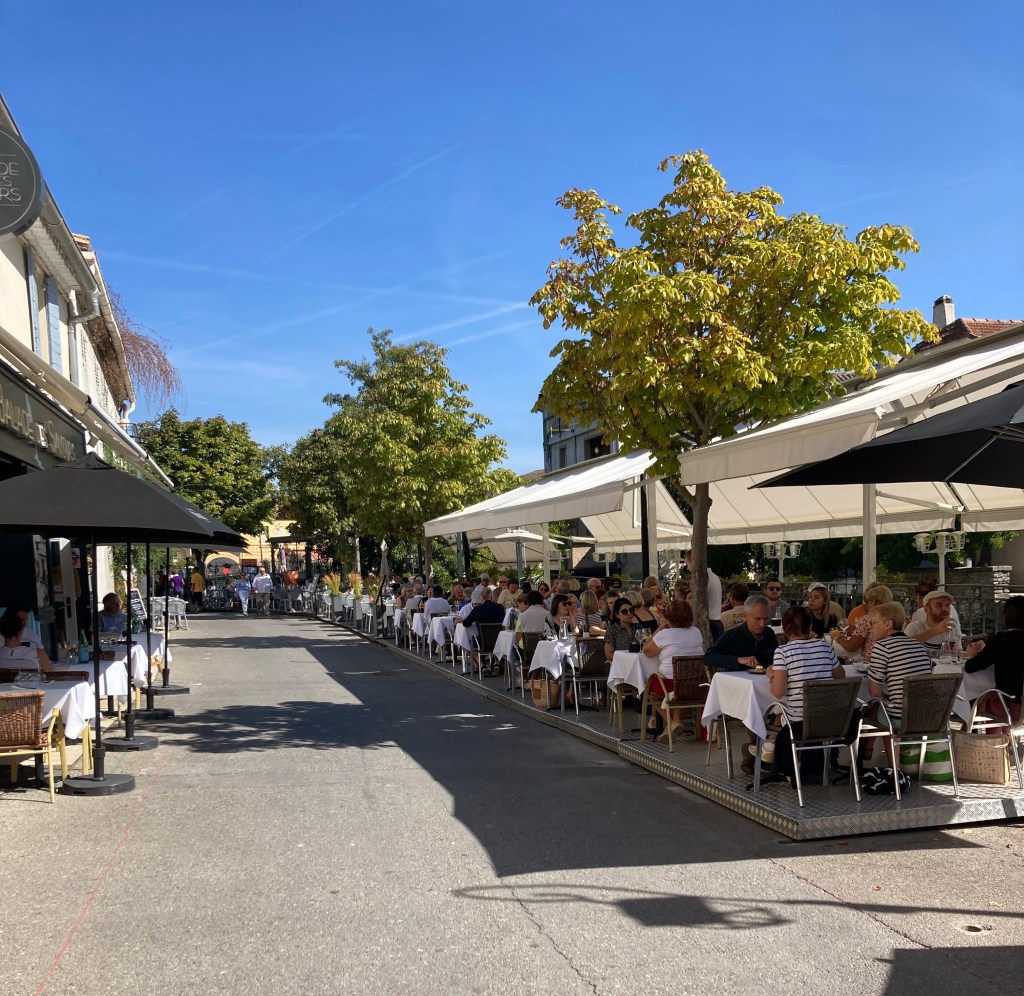
Being the foodies that we are we love the outdoor eating scene, with city squares filled with restaurants, each with an outdoor eating space. In the USA many restaurants do have outside seating, but it is hard to find a place with ten restaurants within a 200’ x 100’ square like we found in Arles. This view is along the Sorgue river in L’Isle-sur-la-Sorgue – there are five restaurants in this photo. Most of the river in the city is lined with wonderful places to eat and enjoy friends.

In France, and much of Europe, eating outside is just the way you eat out, unless the weather is so inclement that it is impossible. I have had coffee, wine, and food many times in the winter months, sitting outside, and no one thinks it strange. I would miss living in a place where al fresco is the first choice, not an afterthought.

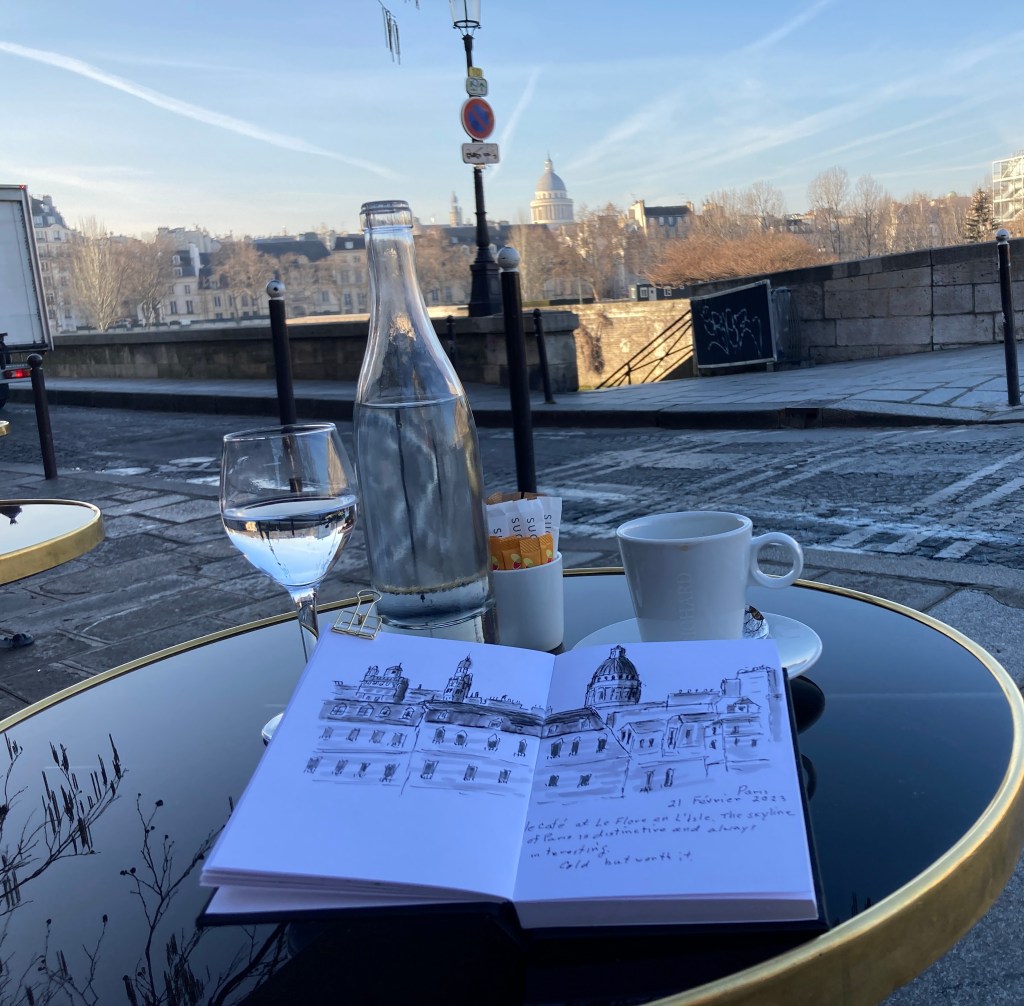
As often as I write about my morning coffee and sketches it is quite easy to understand how I would miss that. Starbucks just isn’t the same as something like this.
Then there is the cheese, oh my! Not only is the variety mind boggling, the prices are unbelievable. Here are some of my favorites, and just a few at that. None of these is over 4€ here. Most would not be readily available in Seattle or Portland unless it was a specialty shop with specialty shop prices.

There is more than food and history I would miss, how could you not miss a country where in the park you can’t ride a bike, play soccer, or walk your dog, but there is an urinal close at hand. Such facilities are the norm in this country, no one thinks a thing about it.

For years we loved visiting France and Europe, as a place to travel for les vacances it is wonderful. Now that we have lived here, it is the everyday environment that becomes more appreciated.

Some Foods You Surprisingly Might Like

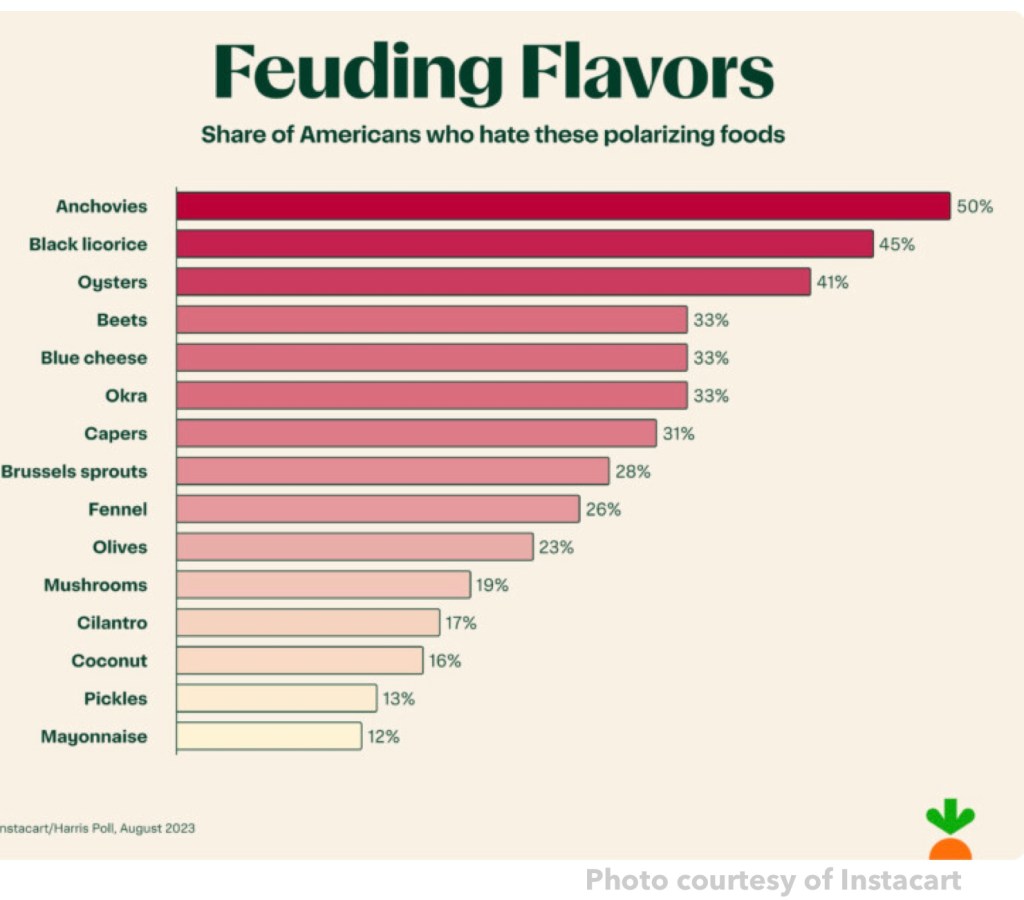
If you follow this blog, you know that my taste in food is pretty broad and some would say adventurous. Most things are not out-of-bounds to me for at least a try. This morning I found this article about the least liked foods in America. It is based on frequency of orders at Instacart. This research would not qualify in a peer based scientific paper, but it is interesting nonetheless. I put the link to their article below the graph, it has some interesting information.

Thanks to Instacart

The first thing to know is that I like all fourteen of these, some more than others for sure, but none of these would be in any “hate” list I would make. Reading through this list I come to the conclusion that it may not be the foods themselves, but how they are prepared, or it might be which kind of the given item you have tried.

In the era that I grew up in, the 50s and 60s, cooking was pretty basic. As a general rule meat was cooked until it was well done, dry and stringy – any pink in the roast was considered life threatening. That style did get me to eat a lot of mashed potatoes, as it was all that would work to get a bite swallowed. Anything in the poultry category terrified moms and dads in those days, so it was likewise cooked to near destruction.

Vegetables were categorically boiled, turning a wonderful stalk of broccoli into some obscene gray paste – I have a friend who is scared for life and cannot be in the same room as broccoli to this day. I would recommend psychological counseling, but I doubt it would help.

So let me shed light on the first five of the items on their list. My conclusions are based on extensive research, well five minutes of internet searching and a lot of years of just eating, so this is iron-clad.

Anchovies

For most Americans their exposure to anchovies is from a flat can. These are packed in oil and quite salty. They are also the basis of Caesar salad dressing, and some use them on pizzas.

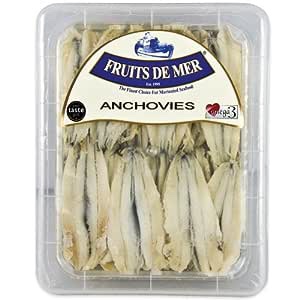
Though I enjoy them straight on a cracker or in a salad, I do get why the strong salty-fishy flavor puts some off. Thankfully for the poor anchovy fish there is more to them than this. Here is what the fish looks like – cute little things. They range from 2 to 40cm, and there are more than 140 species.

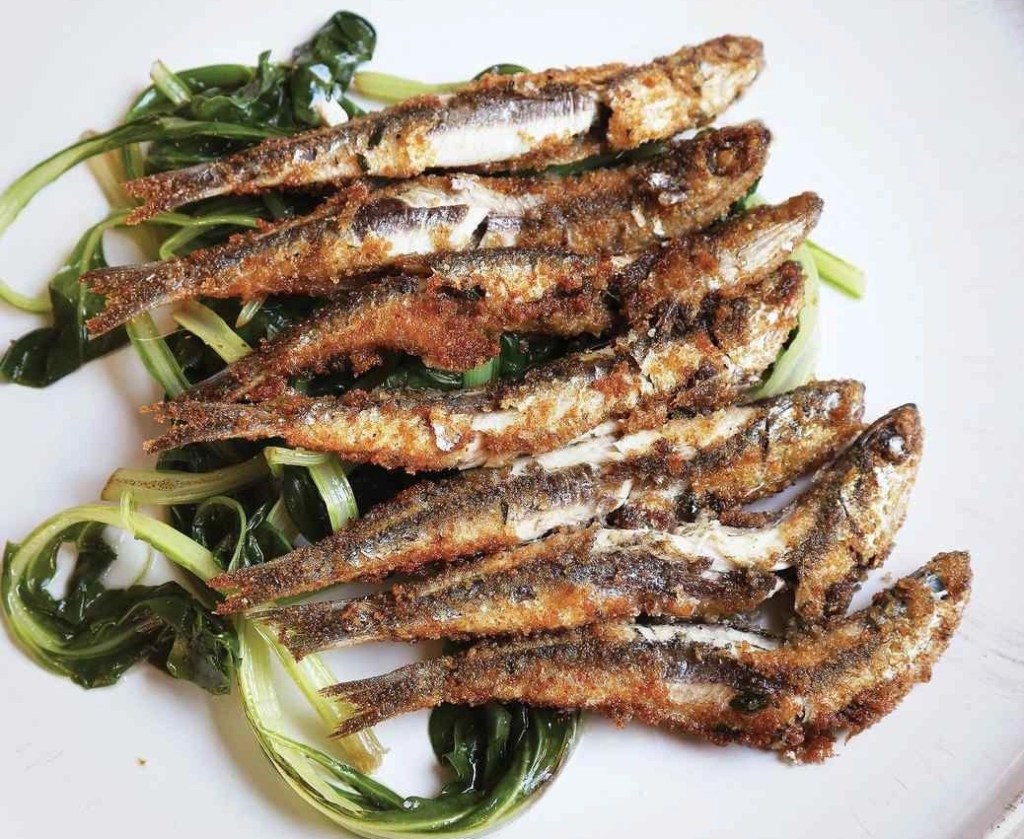
It is common here in Europe to see them fried or grilled as in the photo. White anchovies are common around the Mediterranean, none of the salty fish flavor of the canned. They make a wonderful appetizer.

Black Licorice

In my childhood red or black rope licorice was sold from a jar by the stick, usually for a penny, which made it a popular item, even though it was usually pretty dried out. Today, moister ropes are available, and Australian licorice is a treat – it is soft and chewy. According to Livestrong.com licorice in moderation is a good sweet snack, far superior to most other candies.

Oysters

Of the top five on the list I can see this as the challenge for many people. For me, the best way to eat an oyster is raw on the shell, but I understand the squeamishness of some people – live, raw, and the texture. But that is not the only way to eat an oyster. Roasted in breadcrumbs as in Oyster Rockefeller, or in a chowder are quite different experiences. Even raw there are a variety of flavors, from mild to quite metallic. In Louisiana an oyster po’boy is a real treat.

Beets

There was a time in my life when I said that the only mistake God ever made was inventing beets. Over time I have learned that was based on my exposure to over-boiled muck.

First off learning that there are more than just red beets was an eye opener. Golden beets are quite a different taste, and roasted they are one of my favorites these days. Pickled red beets are pretty good in a salad; of course pickeling most anything makes it better. Mama Melina’s in Seattle makes a beet, walnut, and gorganzola salad that is quite good.

In addition to some actually great flavors, beets are anti-inflammatory, build up your immune system, good for your complexion, and boost energy, just to name a few of the benefits.

So like all of the others so far, our reaction is often tied to childhood experiences, and to a limited experience with varieties or preparations. Maybe you should do what I have done and give beets a second chance.

Blue Cheese

This would include Roquefort, the king of blue cheeses, gorgonzola, and a plethora of other cheeses with the distinctive blue mold. Only cheese from the region of Roquefort in France can use the name, all others are a form of blue cheese.

Blue cheeses vary in taste from very mild to strong, and from slightly sweet to salty or sharp; in colour from pale to dark; and in consistency from liquid or very soft to firm or hard.

Wikipedia

I love most any blue cheese, but if you aren’t a fan, maybe it is because you havent found the one you do like. The best salads have blue cheese crumbles sprinkled in, with a nice red-wine vinaigrette.

The rest of the items on the list might just surprise some people. Roasted Brussels sprouts are quite different from boiled, fried okra is not stringy, It is rare that Tricia and I boil anything, it takes out the flavors. Try steaming, or roasting instead, the results will be quite different and always better for you than boing out all the nutrition and flavor.

It is 11.00am as I write this, I am so glad it is getting close to lunchtime, all this thinking about food makes me hungry.

La Baguette and Family Secrets

We have been hiding a family secret since July of 2007 – 16 years. Now, living in France, it is time to come clean. We – Alexis, Tricia, et moi – visited Paris, along with my dad and stepmother in 2007. Tricia had a great idea for a Christmas card photo for that year.

My dad took this photo. The three of us in a perfect stereotypical French pose – baguettes and the Eiffel Tower. Note carefully the three baguettes, specifically the paper around them. Note that Alexis’s is different. (Also notice her Pichard looking red bag.)

We bought the baguettes on the way to the Tower. Like many French people would do, Alexis broke off le crouton or le quignon (depending on which part of France you are in) and began to eat. It is the first end of the baguette and considered a delicacy.

She ate the first bite, then a second, and a third, and … Well by the time we got ready for the photo-shoot she only had about six inches of the Baguette left. I understand completely, yesterday I bought a baguette, which I proceeded to eat, with Tricia’s help, until it was about half gone.

So when we finally were ready to take the photo, Alexis had to hold her mostly empty bag, with just the remaining tip protruding, not a whole baguette, as the picture portrays. So now you know the whole story.

In France there are four essentials for living: Une baguette, du vin, du fromage, et un café – bread, wine, cheese, and coffee.

In a small village like Ceaucé, our nearest village, you can always find a baguette in the early morning. If the boulangerie is closed, there will be a sign in front of the small convenience store that they have bread. Yesterday they were both closed, so the sign was in front of the charcuterie. A charcuterie is a meat and sausage market, but behind the counter was a large bundle of baguettes. They only cost 1.05€, regulated by a government that believes essentials should be protected. She handed me my baguette, which, in true French fashion, had no wrapping of any sort, just a delightfully crusty baguette. Folks in the USA would cringe, but the French think we are too fussy about such things.

Wine in France is also quite affordable, a nice Cote de Rhône will cost around 4€, it would be $15-20 in the US. I get wonderful Camembert rounds, from right here in Normandie, for 2-4€. So for under 10€ a person can eat quite well, with room left over for un café at a local café.

My friend Shirley, will most likely tell me I left out croissants, but for the French, croissants are more of treat than an essential, but like Shirley I could easily add them to the list. And the French do adore their croissants.

One of the concepts that I like about France is that the essentials for quality of life are quite simple. That is a lesson I hope to keep from our time here in France. Tricia likes the statement La vie est belle, and I think the simpler you make it the better it is, thank you France for the education.