When traveling we seek out good food, it is one of the most important things for us. I would rather find a good restaurant than visit most museums. Back home food continues to be a priority. We focus on vegetarian meals and seafood. Thankfully we can eat quite well here at La Thebauderie and our surrounding area. Here are a few of our meals since we returned from Norway.
Three dishes stand out as the best over the last couple of weeks. Tricia and I like to cook just as much as we like to eat, so two of the best meals were here at chez nous.
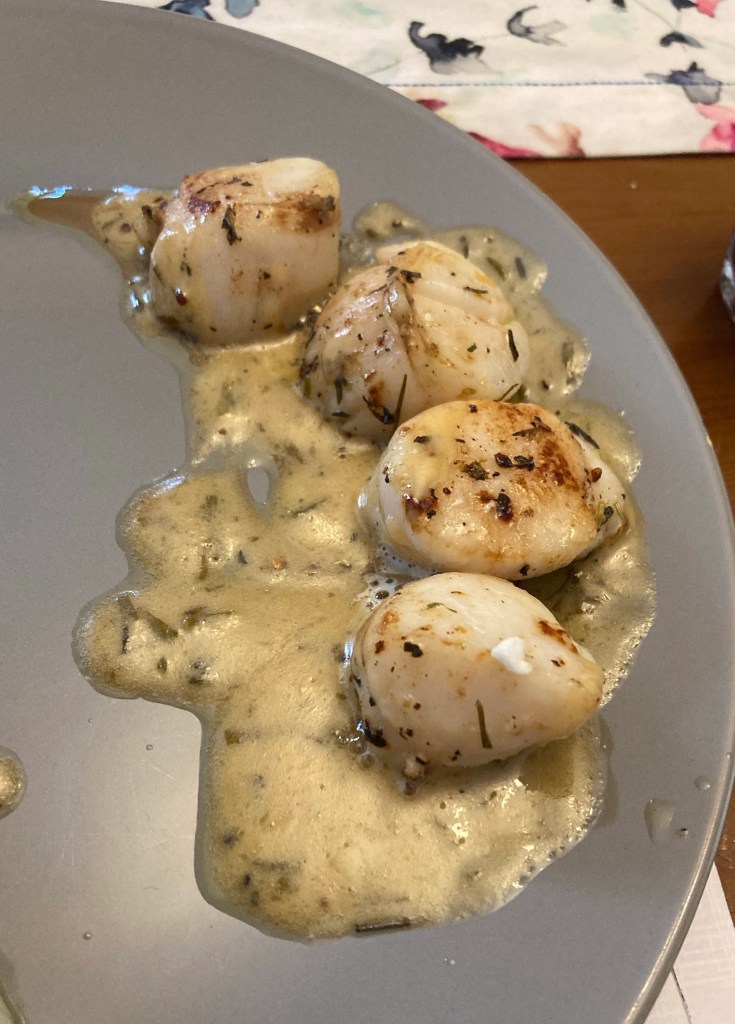
Le meilleur was the scallops that Tricia made last Sunday. Her scallops are alway très délicieux, but this time she outdid herself by creating a lemon butter sauce that is easily one of the best sauces I have ever had. She served them along with sautéed cauliflower and green beans.
Last Monday, I made a lunch of grilled anchovies and vegetables – I would have shared it with Tricia but she is not a fan of some of my grilled fish. Here in Europe canned fish are gourmet quality and considered a delight, unlike the reception they often receive in the US. These anchovies came from Brittany, don’t confuse them with the wonderful salty kind you find on a pizza, these are small whole fish.
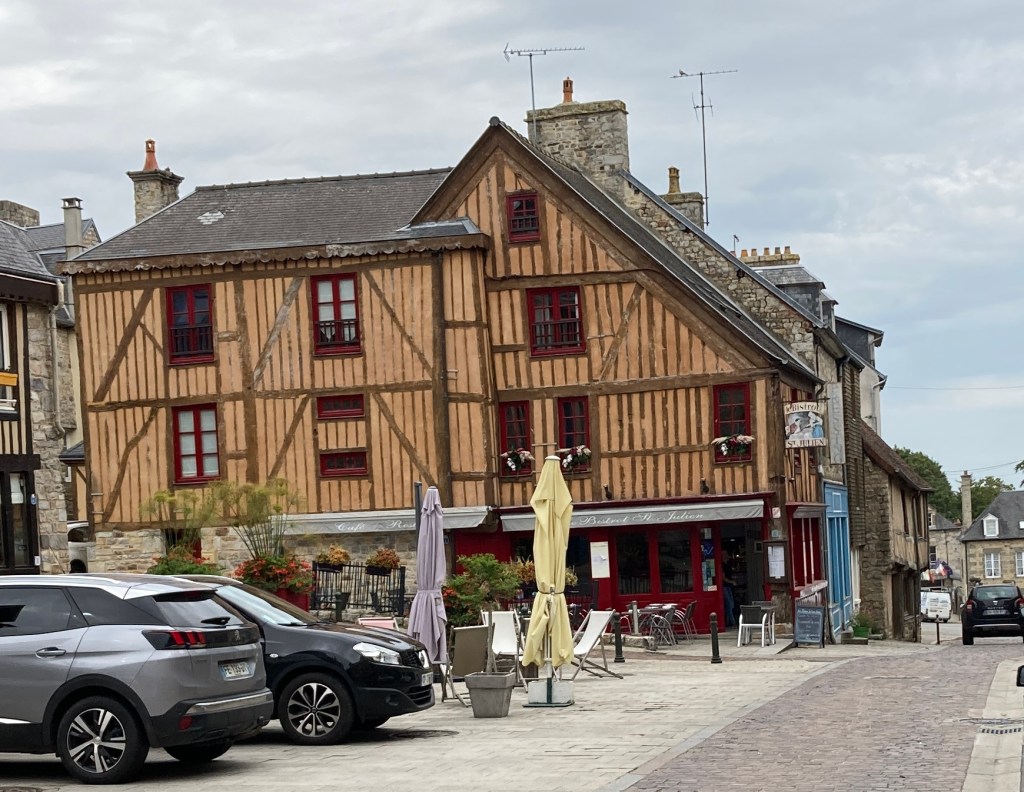
We went to Le-Bistrot-Saint-Julien, the first restaurant we went to when we moved here in 2022, and it is still one of our favorites. It is located just a block a way from the chateau in the medieval part of Domfront. The menu-du-jour is usually my choice, this day we both chose it.
The entrée was goat cheese wrapped in a crispy thin dough and a salad.
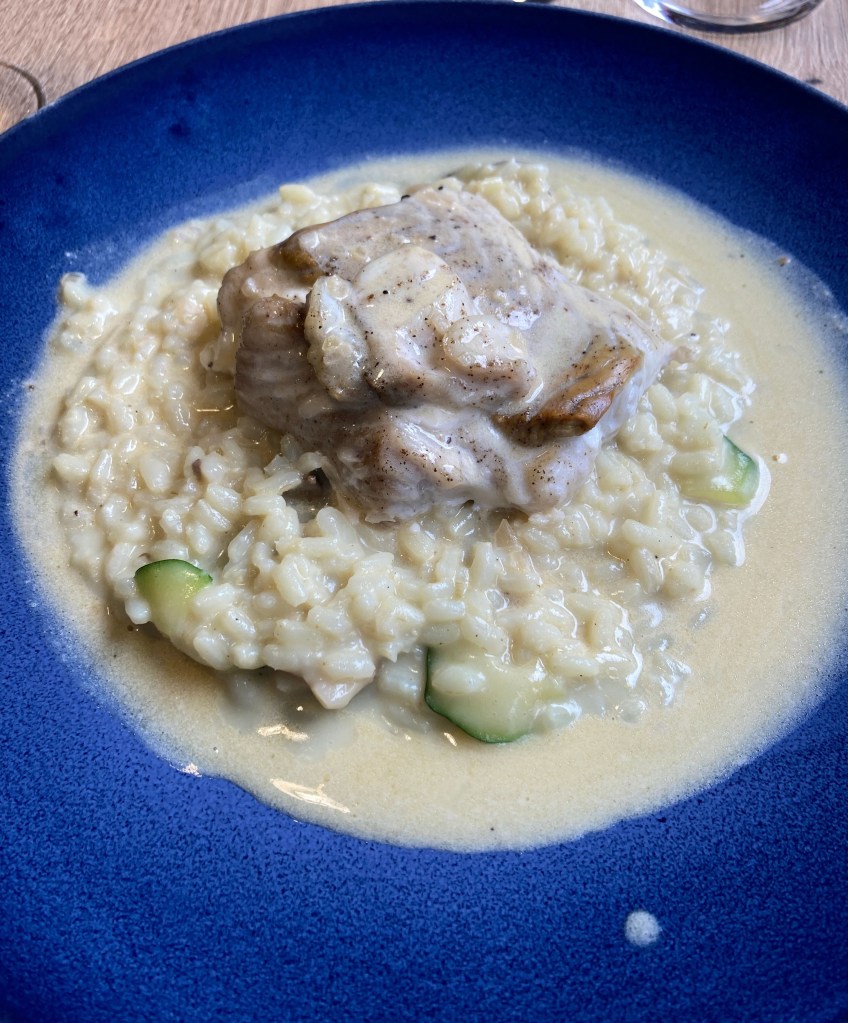
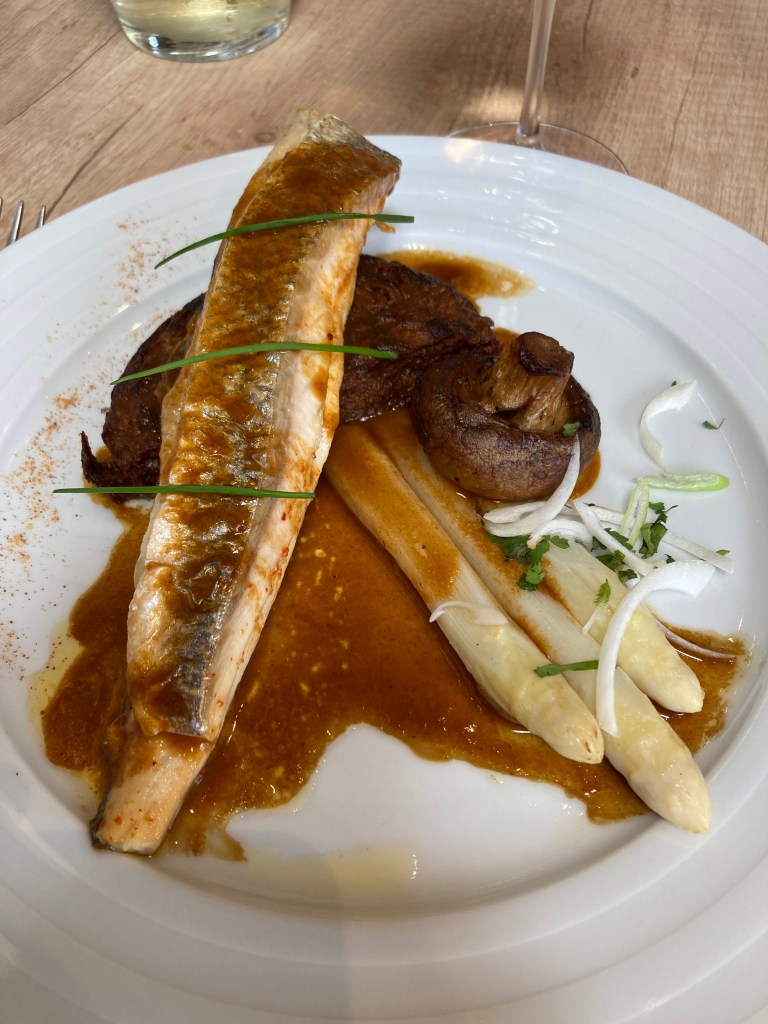
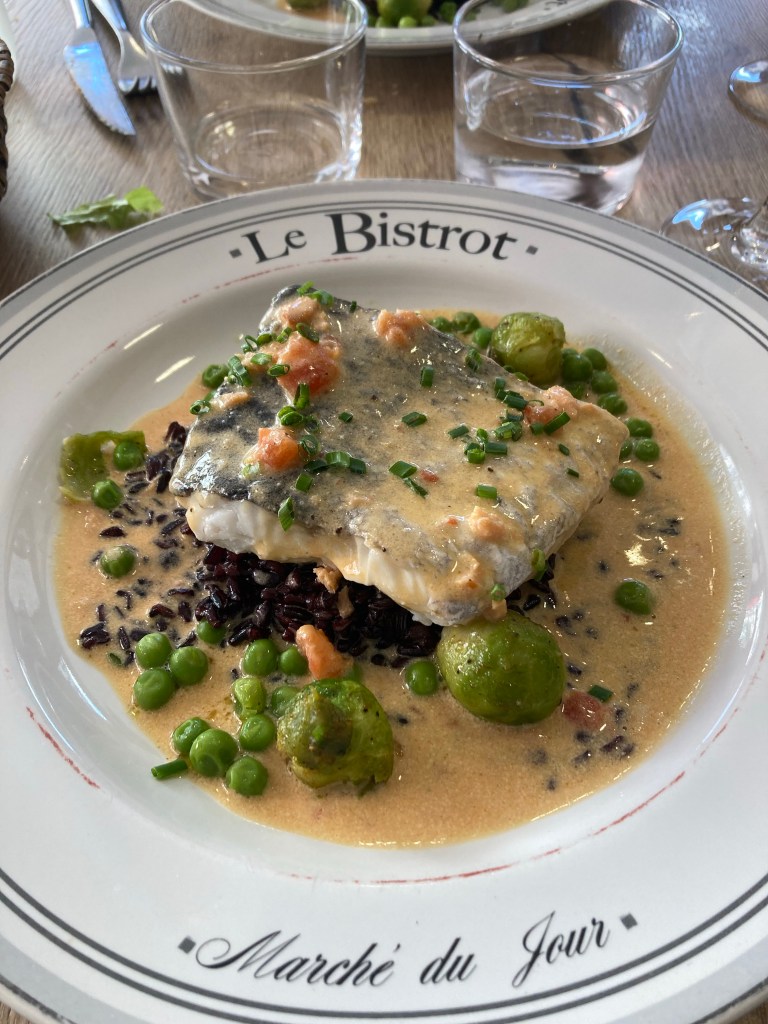
The main was black cod and risotto, it was so good. Thankfully in France using a bit a bread to sop up the sauce on the plate is c’est normal.
We do like to eat, some of our best memories include food and friends. Tricia had a sign when we lived in Mukilteo, “If you love people cook them good food” – I think that was it. And if you don’t do the cooking then find good places to eat together.
If we ever left France and returned to the USA, which would not be a bad thing since we love the PNW, there would be things I would miss. Here are just a few that come to mind.
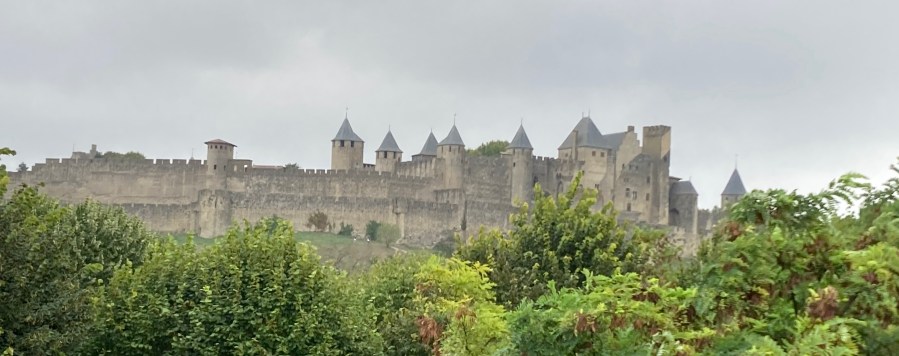
When we first moved to France we spent a lot of time visiting châteaux and old churches in the area. However, after seeing a bunch of châteaux they do tend to all look alike. After a few months we just quit looking for new ones to visit. We do still visit churches whenever we can, but that is for more than the architecture, there is a spiritual element going on there. Yet I would miss living in a country where views like this, the citadel of Carcassonne, are the norm, not the exception.
We drive through village after village, each one is postcard-worthy, but, here in France it is the normal ambiance, the terroir of the place, and I love it. I would miss living in a place where old buildings are a common site, not torn down to “put up a parking lot.” (Joni MItchell)
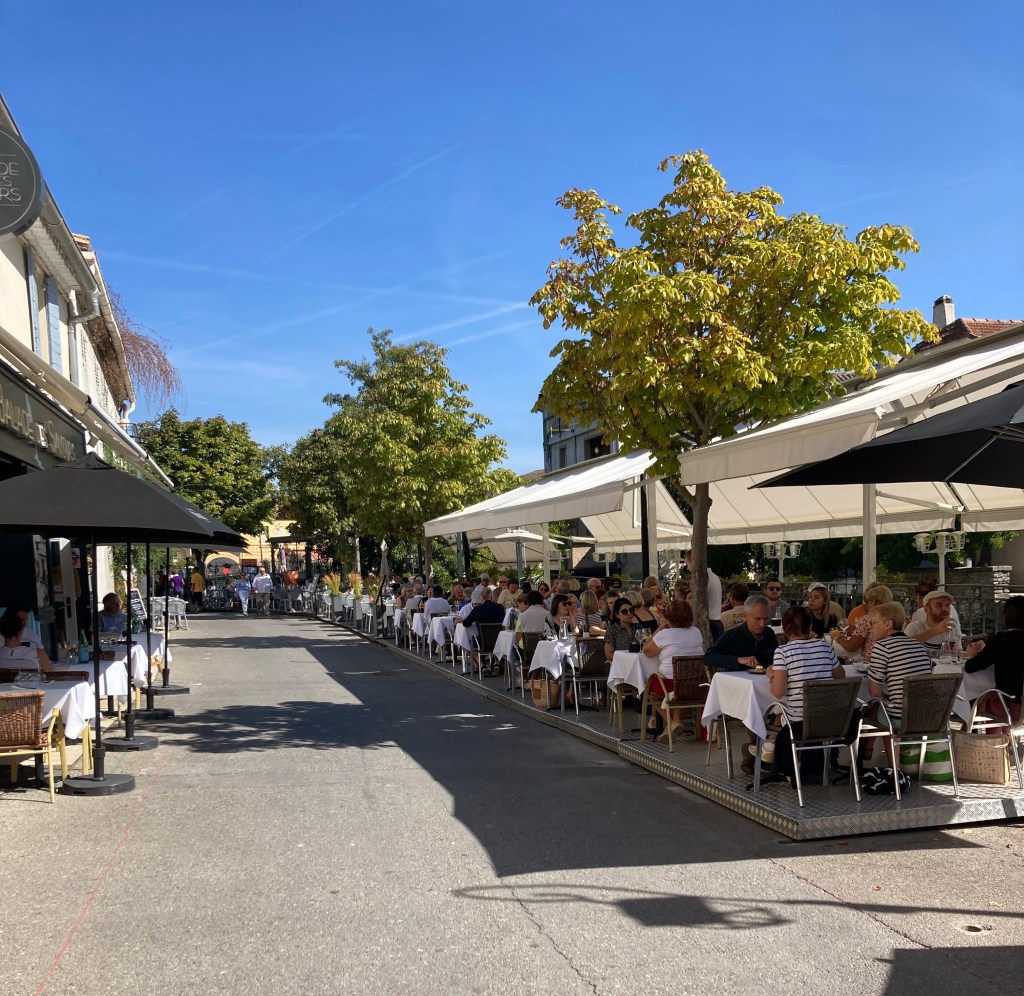
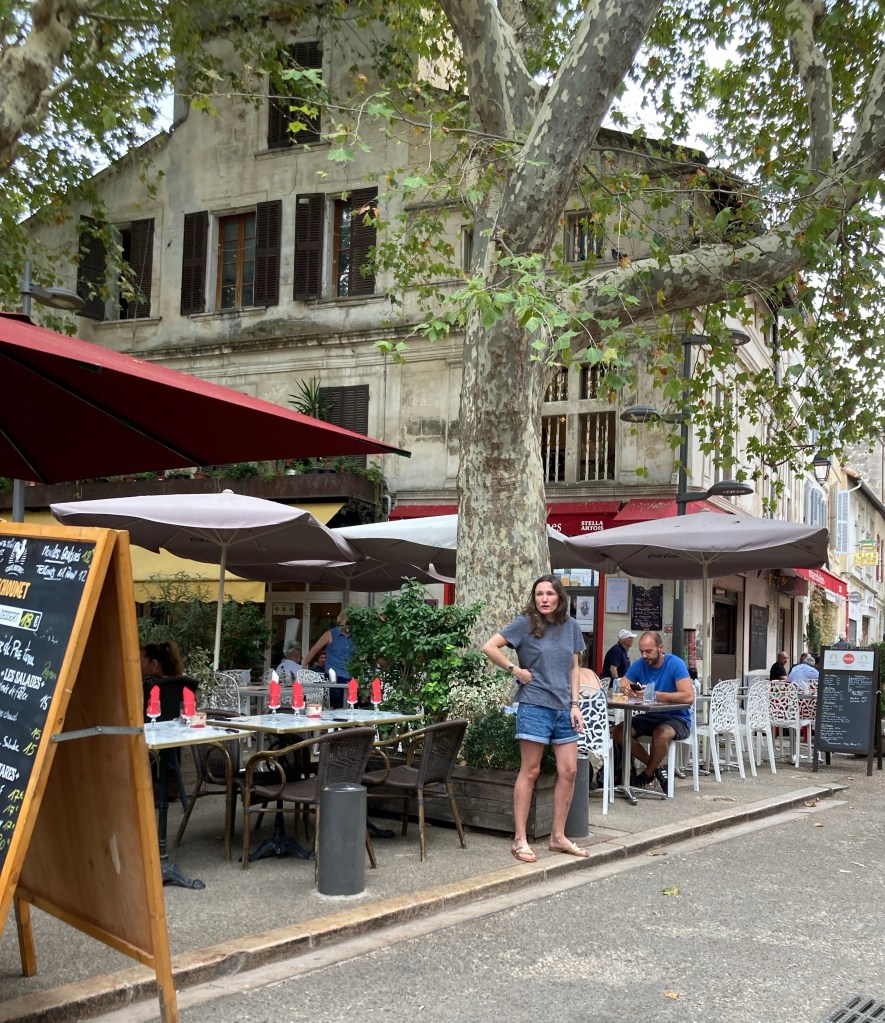
Being the foodies that we are we love the outdoor eating scene, with city squares filled with restaurants, each with an outdoor eating space. In the USA many restaurants do have outside seating, but it is hard to find a place with ten restaurants within a 200’ x 100’ square like we found in Arles. This view is along the Sorgue river in L’Isle-sur-la-Sorgue – there are five restaurants in this photo. Most of the river in the city is lined with wonderful places to eat and enjoy friends.
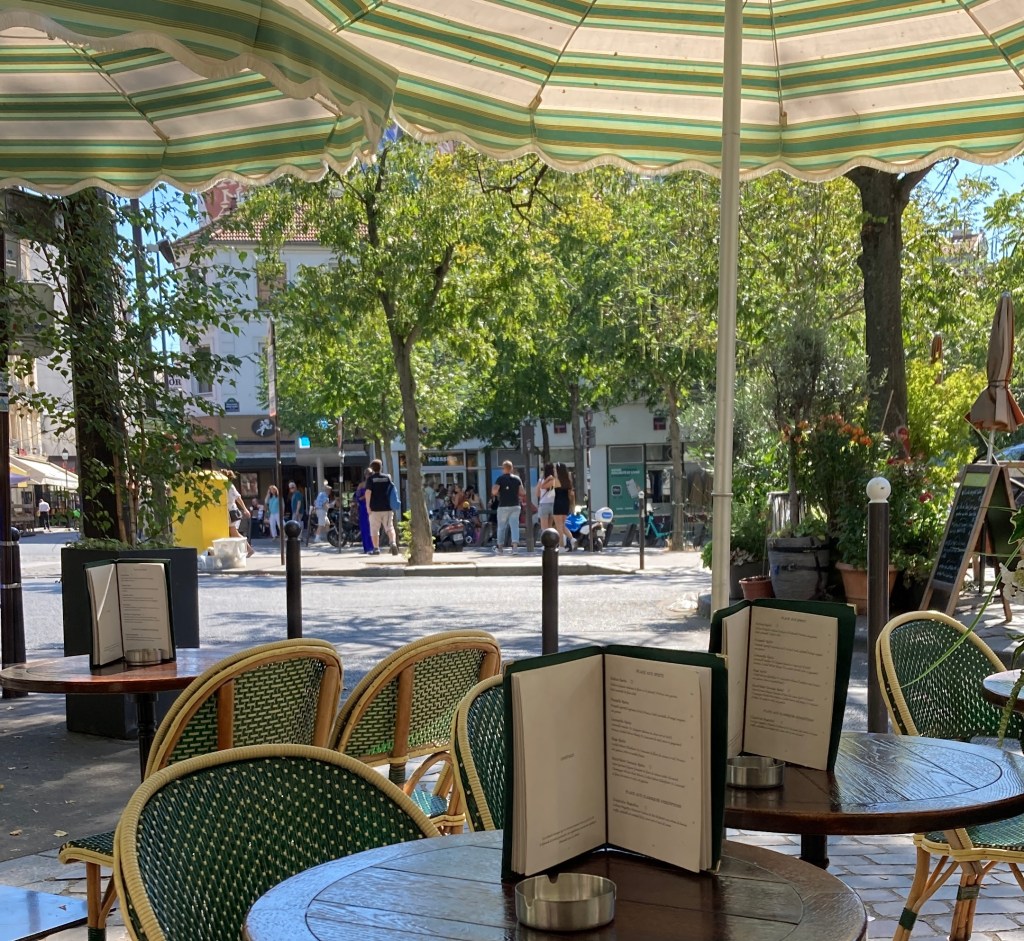
In France, and much of Europe, eating outside is just the way you eat out, unless the weather is so inclement that it is impossible. I have had coffee, wine, and food many times in the winter months, sitting outside, and no one thinks it strange. I would miss living in a place where alfresco is the first choice, not an afterthought.
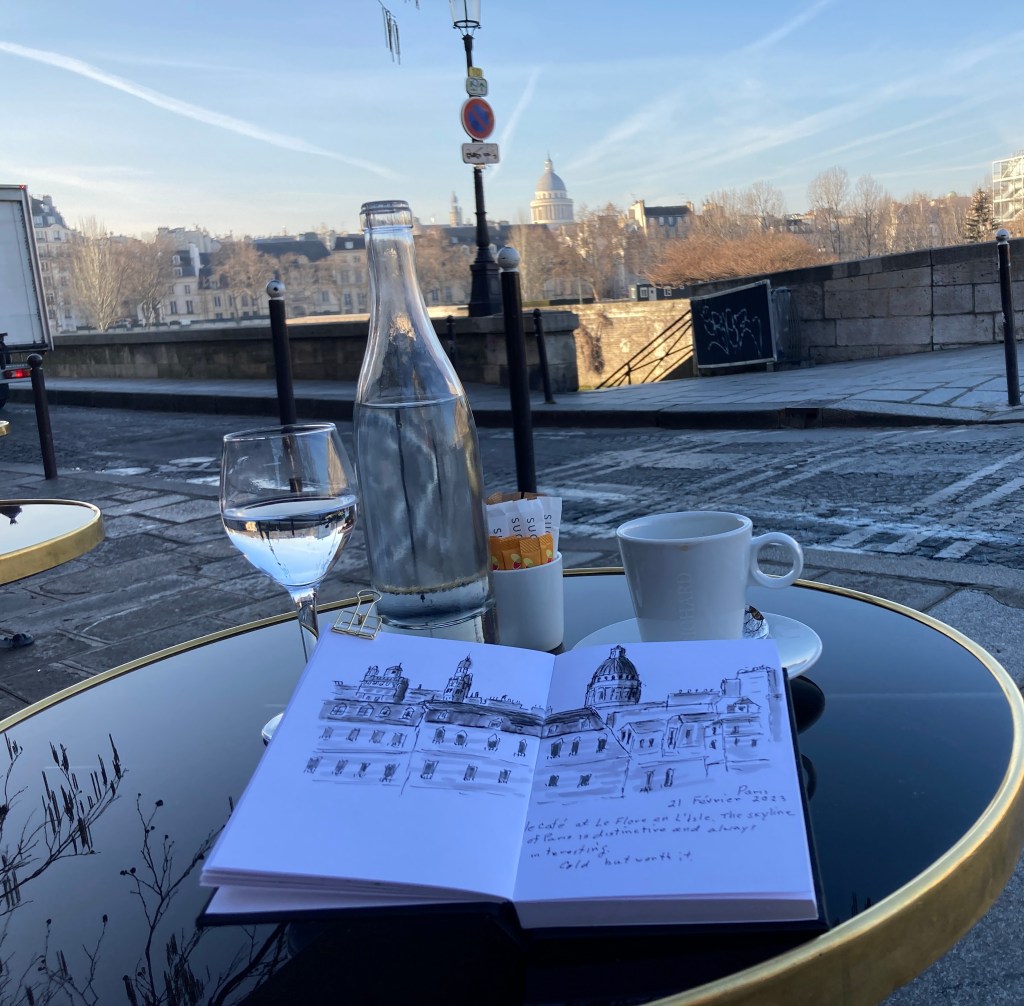
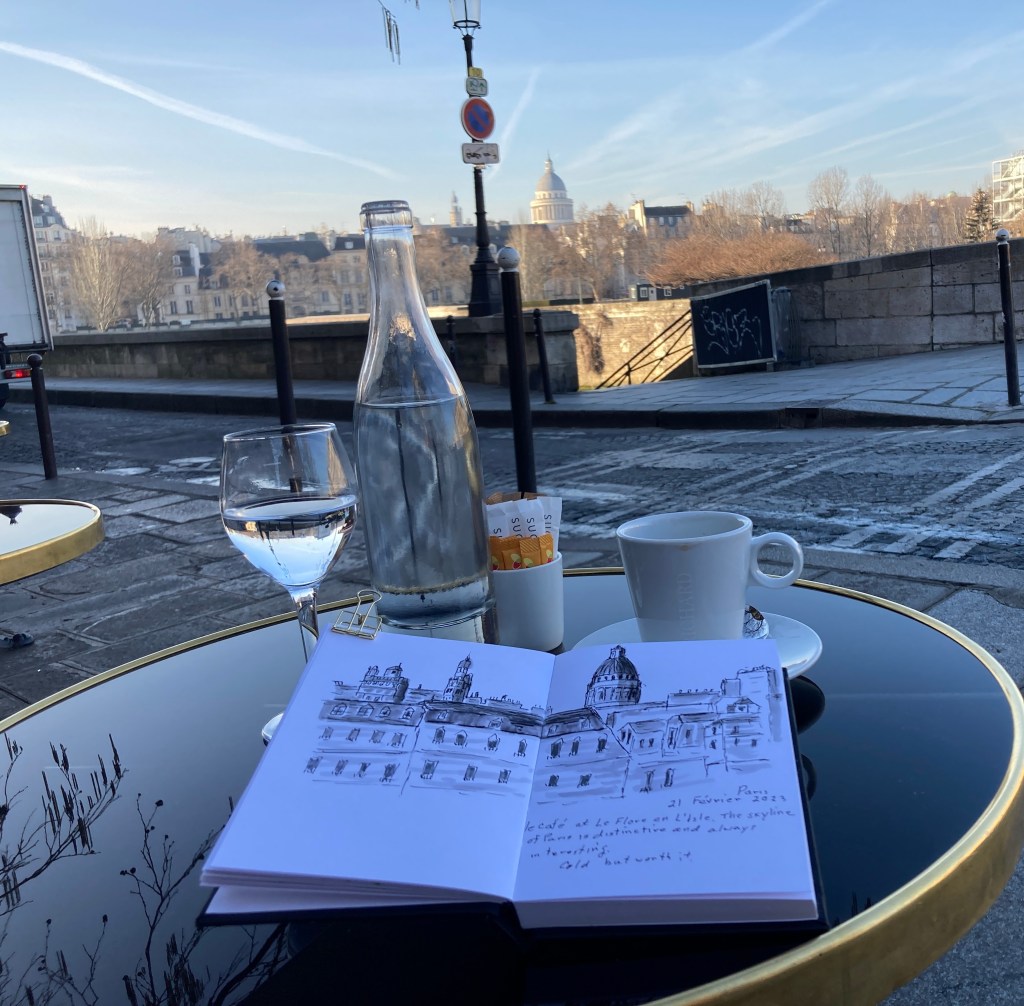
As often as I write about my morning coffee and sketches it is quite easy to understand how I would miss that. Starbucks just isn’t the same as something like this.
Then there is the cheese, oh my! Not only is the variety mind boggling, the prices are unbelievable. Here are some of my favorites, and just a few at that. None of these is over 4€ here. Most would not be readily available in Seattle or Portland unless it was a specialty shop with specialty shop prices.
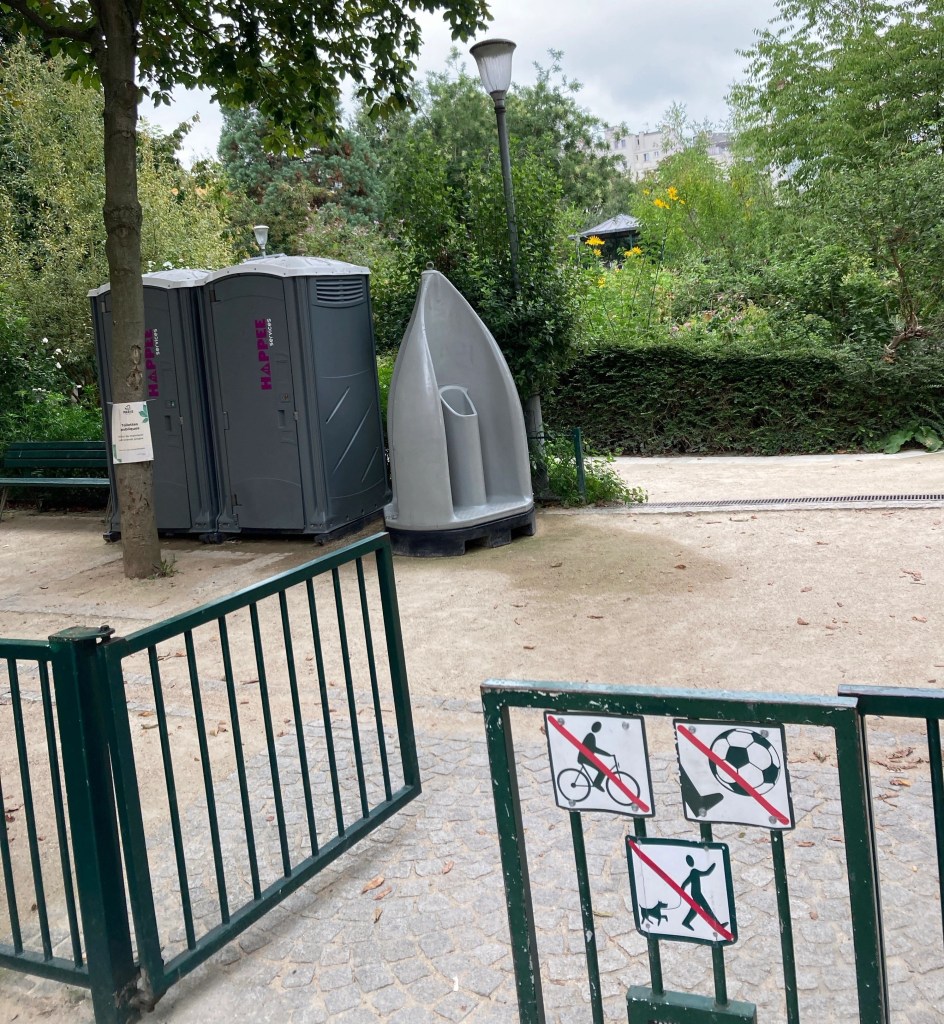
There is more than food and history I would miss, how could you not miss a country where in the park you can’t ride a bike, play soccer, or walk your dog, but there is an urinal close at hand. Such facilities are the norm in this country, no one thinks a thing about it.
For years we loved visiting France and Europe, as a place to travel for les vacances it is wonderful. Now that we have lived here, it is the everyday environment that becomes more appreciated.
After five days in Arles I can confidently say that the food here does not disappoint. Well, except for the one time I ordered a small steak cooked saignant, which in the US would be considered bloody rare, thus the name. As is common here, once they hear my accent, she said, in English, “medium”, I replied, “non, saignant”. It came with just a touch of pink, medium-rare at best by US standards. Thanks to the multitude of folks here from the UK, who tend to like their meat cooked well done, the restaurants often try to compensate, c’est la France.
Our first meal was at Bistrot de Pitchounet, located in a restaurant filled square in the heart of old town.
I chatted with the lady in the photo, not only does she work there, but her father is the owner. All of the staff were wonderful, and the food was just as good. I started with a bit of smoked herring, so different than the smoked herring in Norway. This had a much stronger smoke flavor and I liked it better than what I had in Tromsø a few months ago.
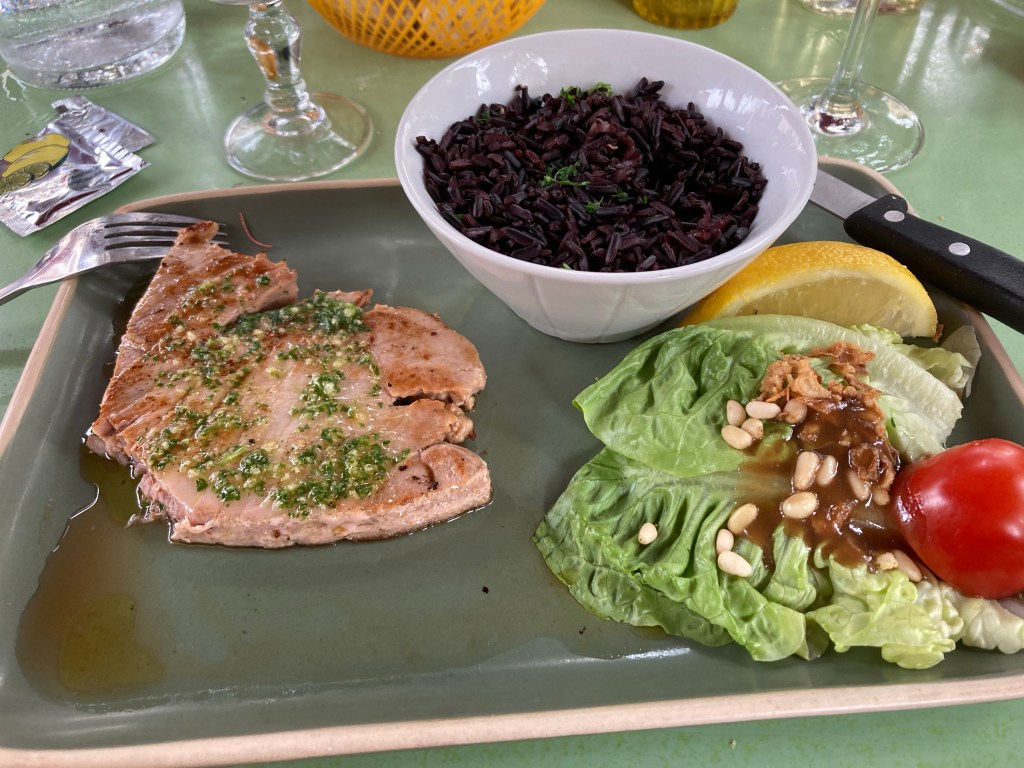
My main was tuna steak, just lightly seared, bien sûr.
Saturday we ate at Gaudina, a small place on a narrow street with service and amazing food. For my entree I had roasted eggplant with olive oil, almonds, tomatoes, and parsley.
My main was grilled octopus. As I have said before octopus must be prepared perfectly or it ends up rubbery, when done right the outside is charred a bit and the inside is moist, this was perfect. The sauce had a bit of spice and it was served on the black rice that is ubiquitous to this region. I have no idea what the crispy, golden accompaniment was, but it was delightful.
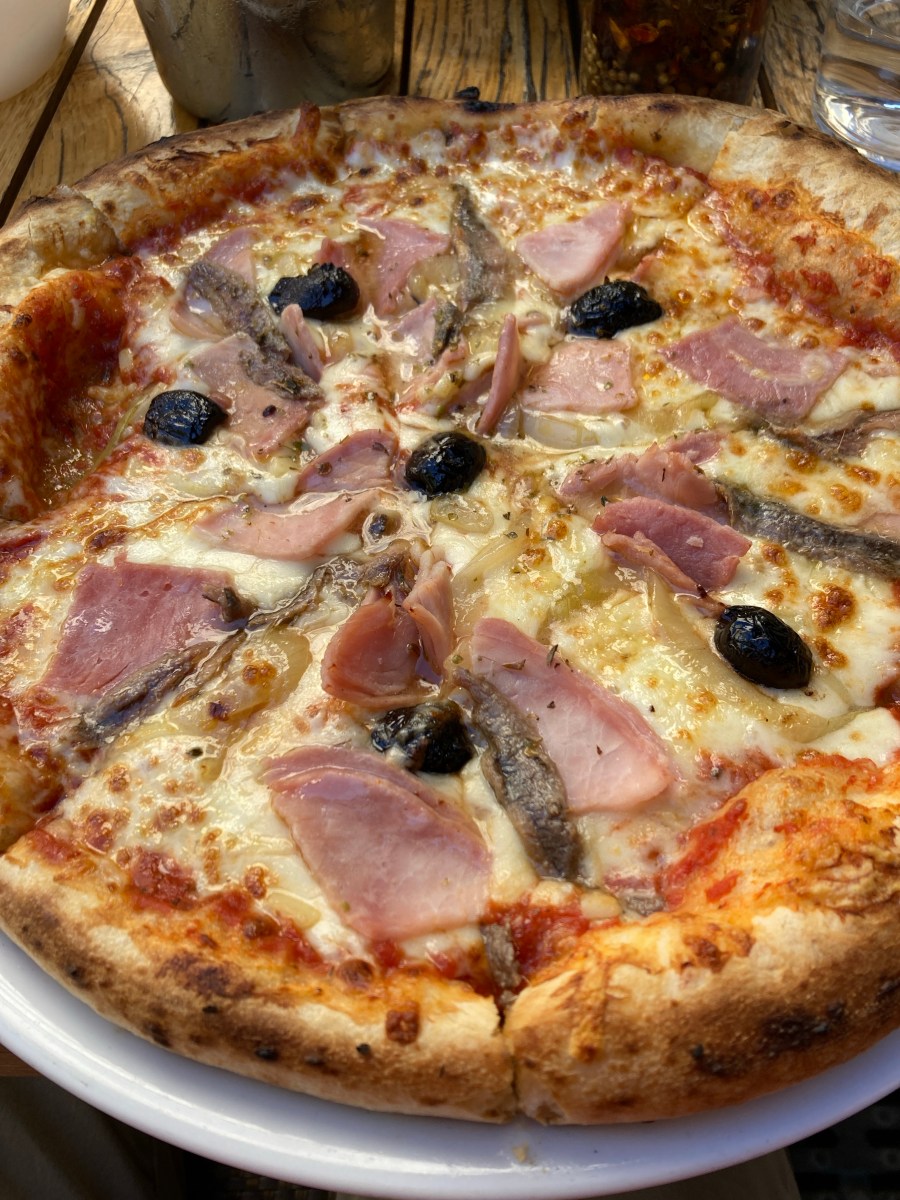
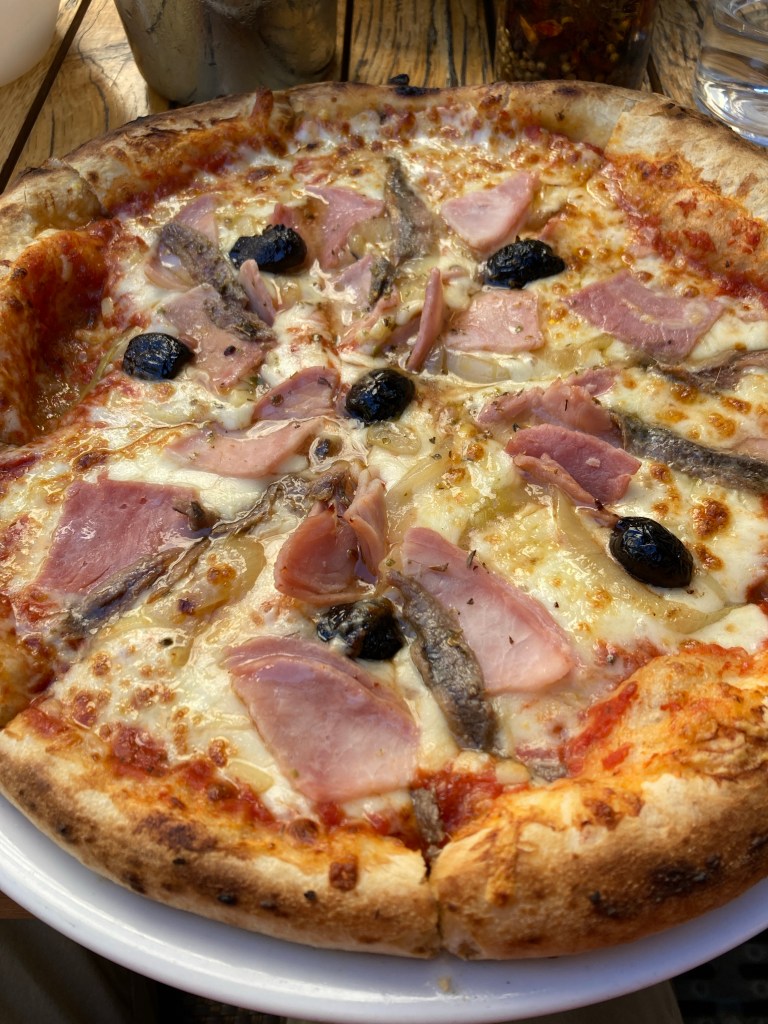
Yesterday I had a wonderful wood fired pizza at Bistro Arlésien. How can you go wrong with a wood fired pizza? They are one of my all time favorites. This one had ham, anchovies, olives, onions, and cheese with a light tomato sauce. I don’t think anyplace in Naples could do better.
Today, we went back to Le Pitchounet, this time I was able to chat a bit with Nikola, the lady in the photo. We started with oysters, the third time this week we have had them. One of the servers told us about the part of the oyster that they call “the foot”. It is the dime-sized, round disk that is usually left connected to the shell after the rest of the oyster is eaten. I have never thought about eating it. He cut it out with a knife so I could taste it. His description was that it was like a sea scallop, and he was right. Why have I never heard of this? We lived and ate oysters for years in one of the top oyster regions of the world, Puget Sound, Washington, USA. Well now we know.
For my main I had a tartare of tuna and salmon. It was interesting that they brought me a bottle of Tabasco, which did in fact work quite well.
Eating is one of the main reasons we travel. This week the food in Arles has resulted in a totally enjoyable time. The Roman remains, sights of Vincent Van Gogh, and a huge market day are just icing on the cake – well, ok, the olive oil on everything, we don’t eat much cake.
I like Europe. I particularly like France. Since moving to France over sixteen months ago, we have had the opportunity to visit twelve European countries, a few of them we had already visited at least once before we moved here – that is more than I ever dreamed I would get to see. If you take all of our European travel over the years we have been to fourteen countries in Europe.
The first conclusion is that I really like Europe, or at least Western Europe. The next conclusion is that I like France the best. With all of its paperwork, penchant for complaining, and unpredictability, it is still my favorite.
Just a week ago we drove back from spending time with Tricia’s sister in eastern France and Switzerland. Tricia was taking a nap as we cruised along the A11 at 130K. My thoughts pondered, what is it about Europe that I like so much?
When I visualize most anyplace in Europe it is cafes, cathedrals and castles, and a communal mindset that comes to mind.
One of the most striking features of Europe, and of course France, is the plethora of cafes and restaurants, most of which have outdoor seating. Al fresco, or en plien air, is the norm here. In Europe, the first choice is sitting outdoors for coffee, eating, and hanging out. The time of the year makes little difference. In the dead of winter, folks sit outside with un cafe or a glass of wine chatting with their friends.
The cafe culture, which France is famous for, is more about people than what is consumed. People watching is an ubiquitous pastime here. In most cafes, the chairs face the street so you can watch the people parading by. There is no rush at a cafe, and you will never have a server indicating that they need the table – a 2€ un café entitles you to sit at the table for as long as you like. The cafe scene, just hanging out over a cafe, is something that most of the population takes part in regardless of status or age – cafes, en plien air cafes, are in the very fabric of peoples lives and outlook on life. It is a time to slow down to experience la joie de vivre. I like it a lot.
Another striking feature in Europe are the buildings, especially the churches, chateaus, and castles. Every city or, in a large city, like Paris, neighborhood, has a central area with an old church. Usually the weekly market is nearby, often a castle on a hill overlooks the whole scene.
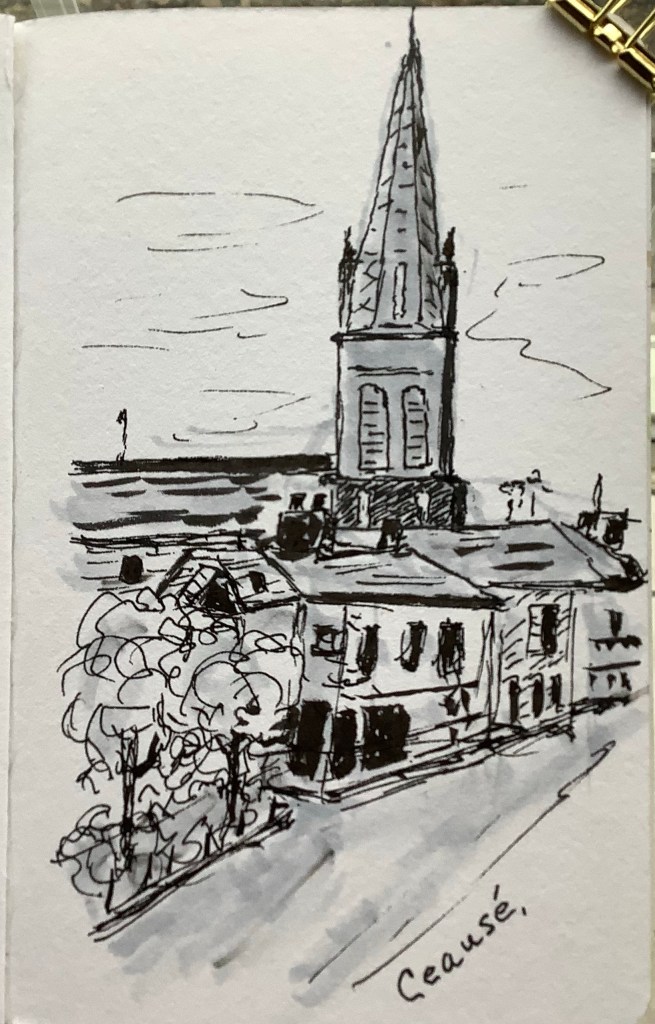
St Julien’s Ceaucé churchChateau de Domfront
It is quite clear that this is an old culture which people are quite keen to embrace. One of my favorite scenes from the movie LA Story is when Steve Martin is giving a tour of the city and he says with incredulity, “Some of these houses are twenty years old!” We live in a house that is over 230 years old and we are surrounded by houses just as old. A twenty minute drive from here we can eat at a restaurant that sits in the shadow of Chateau de Domfront, over 1000 years old.
Joni Mitchell got it right when she sang, “They paved paradise and put up a parking lot.” In the US we tear down buildings. In Europe they update the building while valuing its history. In Europe, there is a connection to history which gives a different perspective on the future than if society is just focused on the next new thing.
The communal attitude of Europe and France stands out as well – public transportation and healthcare are two of the best examples. Trains and subways make it quite easy for many folks to never own or really need a car. Bicycles are common all over Europe, as are motor scooters. What is rare are large SUVs and trucks.
Healthcare is seen as a public necessity, not something connected with a job or only for the well-off financially. Yes, it has its frustrations, to expect otherwise would not be realistic. It is comforting to know that the societies of Europe are willing to pay a bit more in tax for the benefit of the community.
Individualism is quite acceptable here, and there is acceptance of live and let live. There is less of the attitude that has grown so divisive in the US where one group feels the need to intrude on the lives of other people’s lifestyles, lifestyles that most often have nothing to do with them. The US claims a separation of church and state, yet the church today wants to impose its beliefs on everyone. France is officially secular, which does not mean anti-religion. What it does mean is that you are allowed to practice your religion and just let me practice mine. (Sadly, recently this is being tested by far-right groups wanting to oppress some races and religions.)
Europe is not perfect, and like a good Frenchman I can complain with the best of them about the bureaucracy, the frequent waiting, or that we still have 3G phone service half the time. Yet, I like it here. There are a few places I know in the US that are close, like the part of Portland where our friends live, and a few pockets in Seattle, so if/when we return to the US we will need to seek out such a place. But, in the meantime, I will enjoy France.
Next week I will explore why I like France the best.
Springtime in Normandie – food, a bit of sprucing of chez nous, and kicking-up our French.
Auberge de la Source in Sainte-Cyr-du-Bailleul remains our favorite place to eat in our area. We are regular enough that we share bisous (the French kiss on each cheek greeting) when we arrive and au bientôt when we depart. So it is always a treat to chat with the owners, she handles the front of the house, he, the classically trained chef, does the magic in the kitchen. Back from our trip to La Rochelle where we were spoiled with good food we headed to la Source for a local fix.
During the week the only offering is the menu du jour. Friday’s was of course perfect. It was bar, a common menu fish here, not so common in the US.
Tricia usually does not order the dessert, but she most always steals a bite or two of mine, you can see why.
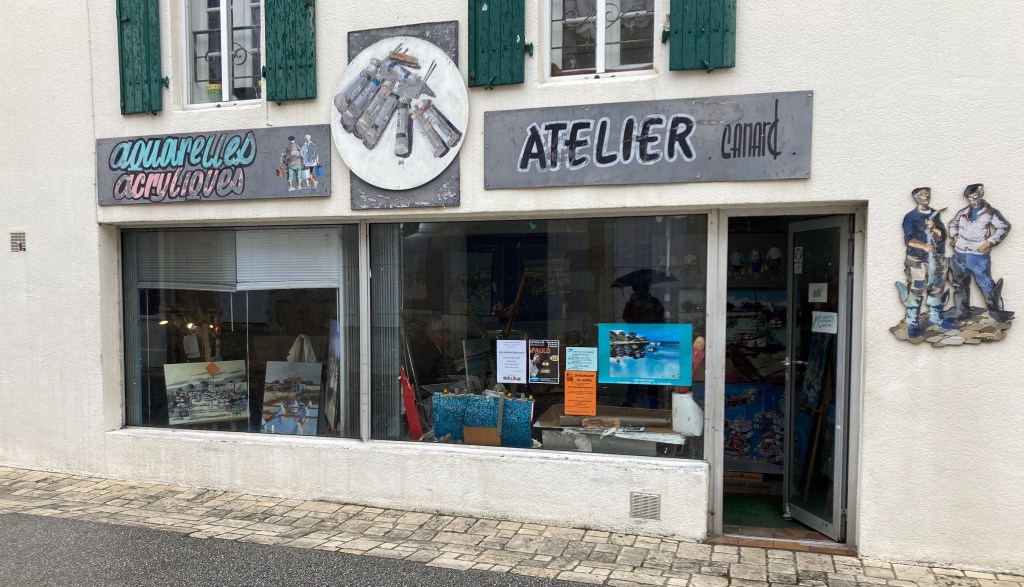
It is Tuesday 9 May 2023 as I am writing this, we have been busy getting ready for tomorrow, when our dear friend Tim arrives to spend almost three weeks with us, on Friday his wife Lisa, another dear friend, who is conveniently married to Tim, it works out so well, will also arrive. Part of our preparation was redoing our gallery wall to accommodate an original painting we got from the artist named Canard in Ars-en-Ré while on our trip to La Rochelle. Here is his gallery and studio, he has been painting for years and I am sure some of the brushes and such are as old as I am.
He paints boats and people of the sea. We bought this painting as it reminds us of our trip and we also commented that it made us think of La Conner in Washington.
Here is the finished gallery wall, well as it is for now. We find that these walls are never finished and that is part of the pleasure of it all.
One of the reasons we came to France was to enjoy France more as residents than as tourists. Part of that has been the French languasge which we both have studied for years. Our Neighbors however all speak English, well the UK version of said language, so we don’t get to speak as much French as we would like. So we found a tutor. She is a delightful lady with a delightful chien, they all live in a house older than ours. AND … She said Tricia was the most advanced student she has, me, I get to play catch-up.
We so like France, the food, the art, well even the language though it is a challenge. It makes the expat challenges all worth it. Hope wherever you are reading this you take some time to appreciate the beauty around you and the joy of good food and friends.
La Rochelle is located in Nouvelle-Aquitaine on the Atlantic coast, about a four hour drive southwest of us. Though rich in history and reputation, thanks to the Dick van Dyke Show, my enthusiasm did not match Tricia’s though I never said anything. Every time she would mention going there, reminding me of the city’s frequent mentions in the book “A Bite Size History of France,” which we had both read, the first image that came to my mind was Dick van Dyke who lived in New Rochelle on his old TV show.
Well, we went to La Rochelle and I am so glad we did. It is one of my favorite places in France, hard to make a list of better places, and of course one of the criteria for a great place is the food, La Rochelle has some of the best we have had.
The Pont de I’le de Ré takes you to I’le de Ré. It is 19 miles long and 3 miles wide, with a number of small communities. We ate lunch at La Marine in the village of Saint-Martin-de-Ré. We ate outside next to the harbour and of course had seafood. Tricia had hake, which she said was great, I stole a bite and do agree. I had Cocotte de la Mer, a seafood stew of mussels, shrimp, langoustines, and shellfish, in a cream sauce all baked with a puff pastry crust. (You get just a peek of Tricia’s hake in the distance.)
A wonderful meal for sure, the sauce was so rich and the seafood perfect.
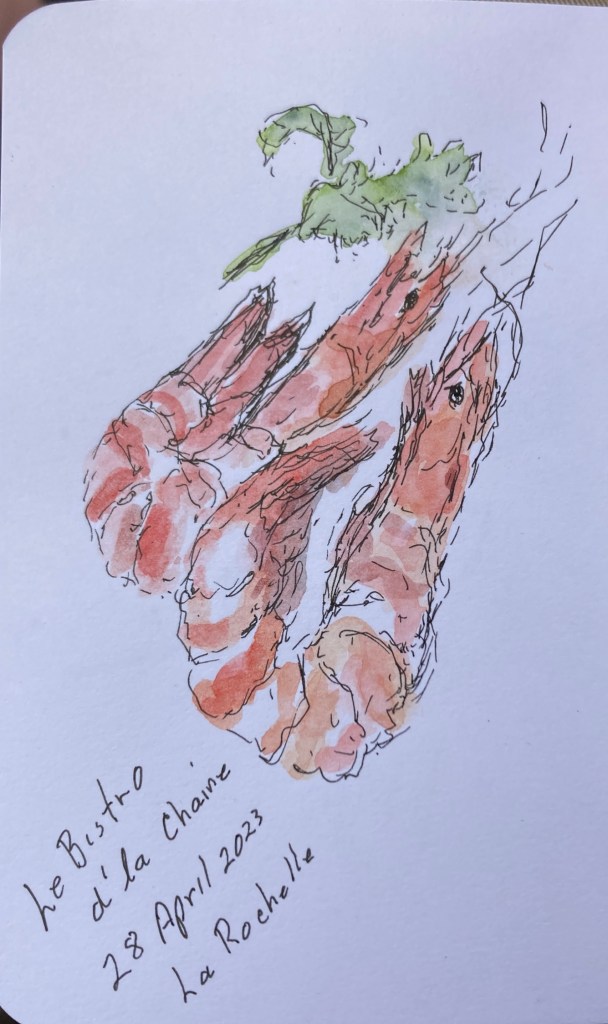
The next day we ate near the old harbour in La Rochelle. We had heard that Andre’s restaurant was the best in the area, but we passed by it as a bit touristy. Just a few yards down the street we stopped in front of Le Bistrot d’la Chaîne,greeted by the delightful owner we took a table, and we are so glad we did. Other bistrots around us and the crêperie across from us had more people, but I know none of them, including the patrons at Andre’s, had a better experience than we did.
We both had one of the best meals ever, the kind that makes it difficult to recall any other meal that was ever more enjoyable. The service was perfect, she helped us with our French, we watched a parade of people walking by, and spent a pleasant couple of hours on a warm but not hot day.
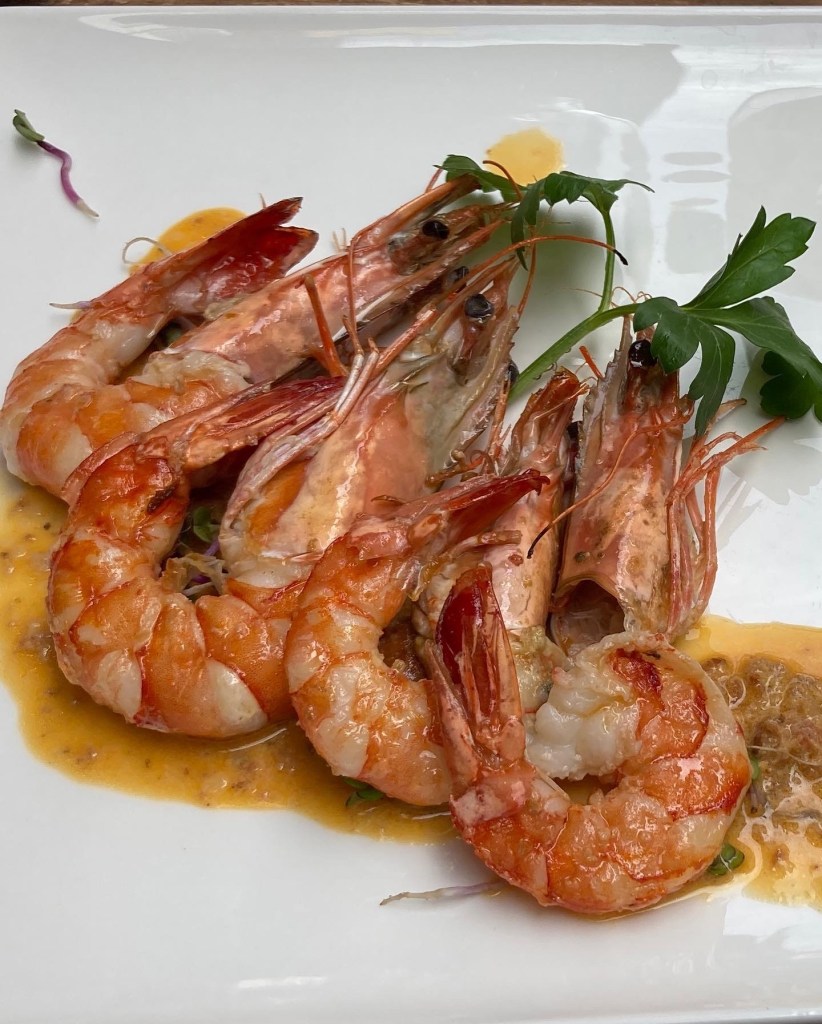
After an entrée of raw oysters our mains came. Tricia had scallops, I had grilled shrimp and risotto.
Thanks to Tricia for the photo
Travel is about learning and of course food. Two lessons from this trip. First off don’t let old blurry mental images prevent you from visiting a place you really have no sharp image of. The second lesson, which I have mentioned before, is to not rely too much on guide books or other bloggers, yep that includes me, for your decisions. You might go to Andre’s and have the meal of your life, or you might go to d’la Chaîne and wonder why we raved. All I know is we loved La Rochelle, and really loved the two meals we had there – we are pretty sure we will return.
So keep trying new places and tastes, you will discover the wonder of the world along the way.
Thirty six years ago this month I went on a date with the lady who would become my love, the mother of our wonderful daughter, my best friend, as well as my travel and food buddy. We have made it through the ups and downs of any relationship yet we still love to eat and travel together. Today I had my first real hamburger in over 16 months – before we moved to France.
When we moved to France we did so with the intention of embracing the culture, and we have done so quite well. Our UK friends still have people bring them beans and brown sauce from the UK, we have only asked for red pepper flakes and Panko. We strive to eat what is here, though we do make nachos at home now and then. But we live in another country, one that is known for its food, which we accept and enjoy.
One of the challenges of living as rural as we do is that the variety of famous French foods is limited. At even the smallest of cafes the food is done quite well but often without variety. It is the same if you live in rural USA, all the restaurants have similar food, I know as I have traveled there. So we do at times crave different tastes. We go to Mayenne to have Indian food, we get to Paris as often as practical to visit wonderful cafes. But every now and then a food from the past gets into my brain as a craving – a hamburger.
Early in our relationship Tricia, who has a degree in nutrition and food science, told me, “If you are going to have a burger then have the juiciest greasiest one you want, enjoy it, but just don’t do it everyday.” Some folks, when they learn that she has a degree in nutrition, give me their sympathy, thinking we must have an austere diet, au contraire, we eat most everything, but with a bit of balance – frites don’t count of course. So it made sense that when I began to vocalize my craving for a burger she was completely supportive.
The French do eat hamburgers, it is common to see them on menus, even at rather upscale restaurants. McDonalds are relatively common, and it is not because McD has forced themselves on the French. McDonalds is a big business, they would not stay in France if the French were not patronizing their restaurants, the French eat hamburgers.
BUT… Often the burgers I see on the plates of other diners do not look much like what the burgers in the US look like. I did order a burger last summer, the bun was black, not gray, not burned from grilling, but black. I have no idea what kind of flour or process made it that way, I have seen the same at other restaurants. It’s texture was like a macaroon, almost like eating air; defiantly not a genuine burger in my book.
The other interesting difference is that when you see a person eat a burger in France it is almost always with a knife and fork, not picking it up and eating it with your hands. In France most everything is eaten with a knife and fork, even pizza.
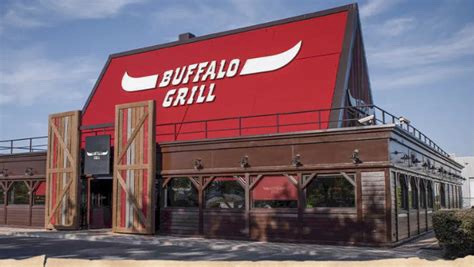
There is a chain of restaurants here in western France that promotes itself as American food, Buffalo Grill. We have driven by them over the year but never stopped, well today we did, in Le Mans.
They have burgers, ribs, chili, even buffalo. So the time and place was right to fill my craving.
I ordered the Extra Cheeseburger – here is the menu description: Steak haché de bœuf façon bouchère ou galette végétale façon chili, cheddar, sauce cheddar, sauce premium, oignon, salade, cornichon. Or, thanks to Google Translate: ground beef steak or vegetable patty chili style, cheddar, cheddar sauce, premium sauce, onion, salad, pickle.
Confusing description aside, it was a genuine American style cheeseburger and I enjoyed every bite – and of course I picked up and ate it properly, with my hands. Tricia had fish and chips, again quite good. So my hamburger craving is satiated for now, and we discovered a place that will work well if we want a taste of non-French cuisine.
I started this blog yesterday, today we are in Montmorillon in the Nouvelle-Aquitaine region of France. We had lunch with friends at a crêperie where I had a galette with chicken and curry sauce, so delicious. French food is great, but every now and then a bit of home comfort is required. We will visit Buffalo Grill again, there is one just 30 minutes away in Flers.
Should you ever get near enough to meet-up with us in our rural part of Normandie for lunch we would recommend a choice between two places: Le Bistrot Saint Julien or Auberge de la Source. Both are about 15 minutes away.
The first restaurant we went to after moving into La Thebauderie was Le Bistrot Saint Julien. In another blog soon I will address the different terms for eating establishments here in France: Bistro, brasserie, auberge, café, bar, restaurant. We chose Saint Julien for the same reason we would take a visitor there, it is next door to the ruins of Château de Domfront, a place we were anxious to see. We have also discovered that in the Michelin Travel Guide for Normandie it is one of only two restaurants listed for Domfront.
A bistrot (bistro in English) is usually a smaller more casual place with a local feel about it. Most will have a menu du jour, which is always the best value. Bistrots usually follow the traditional opening hours of 12h00 to 14h00, though keep in mind that does not mean they accept seating until 14h00, we have been to many places that stopped seating at 12h30 – 13h00. Many reopen later for dinner, Saint Juliens re-opens at 19h00.
This is where we go most often for lunch, we rarely, well I guess never, go out for dinner in Normandie. You know when you have become a regular when instead of au revoir (good bye) when you leave, the owner says à bientôt (see you soon). We have been on à bientôt terms for some time now.
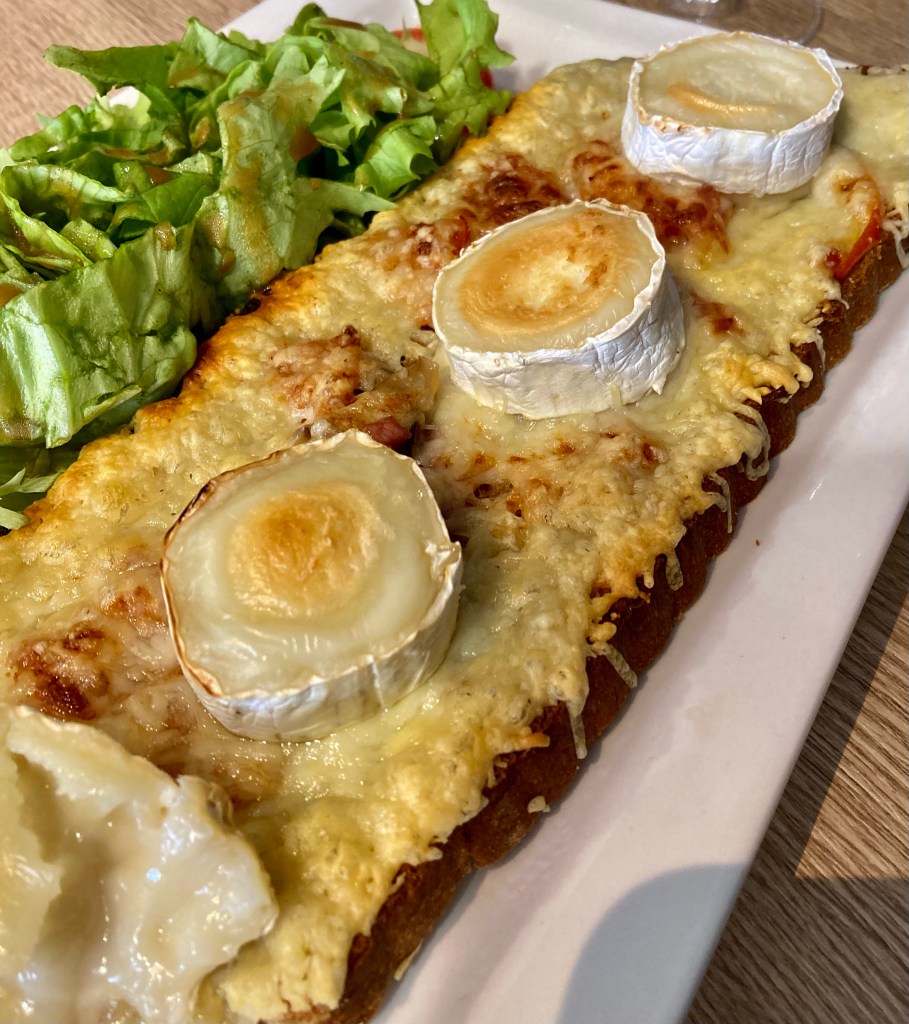
In addition to a changing menu du jour, which at any restaurant in France will have fish on Fridays, Julien’s has a menu of local specialities. One of our favorites are the many tartins. Here is one Tricia had, as always thanks for the photo.
Look at that wonderful chèvre! One of my favorite tartins is chorizo. When our friend Tim visited he was daring enough to try the andouillette, an acquired regional taste; as I remember he quite enjoyed it.
Here is another dish that Tricia had, cod on black rice, and one of my plates.
Auberge de la Source is located in the tiny village of Saint-Cyr-du-Bailleul.
Auberge translates into English as “inn” or “hostel.” Some do have rooms as well as a restaurant. Most tend to be a bit upscale from a bistro but not always – traditional and local products are the norm.
During the week Auberge de la Source only has a menu du jour, while on Friday and Saturday they have quite an extensive menu and no menu du jour, though they do have prix fix options. Like Saint Juliens it is operated by a husband and wife team, something that is quite common here in rural France. The chef at la Source is classically trained and it is evident as soon as you see the first dish, even if it is the apero.
We have had many great meals there, and will have more. Here are a few more photos, thanks again to Tricia for almost all of these in the blog, check other photos out on her blog.
There are plenty of places we go to eat, but these tend to be our most frequent stops. It is a pleasant characteristic of rural France that in some of the most out-of-the-way villages you discover a bistro or auberge, that may be quite plain in its exterior appearance, yet the food and experience is truly memorable. For Tricia and me that is one of the joys of travel, whether it is around where we live or in another country, we do love food – and of course we love it when friends join us.
In France un Café is more than a beverage, it is the cornerstone of the café culture. In the USA coffee is something you do while you do something else, in France it is much more deliberate, for a traveler it is a perfect entry into the local culture.
I have never seen a drive-through Starbucks in France; the drive through food and beverage concept is as rare here as it is ubiquitous in the USA – as are insulated travel cups. In France you stop what you are doing to have un café. The Dunkin Donut idea of unlimited refills is just as strange, as would be a “grande” or “venti” size. These are uniquely American concepts where quantity often supersedes quality.
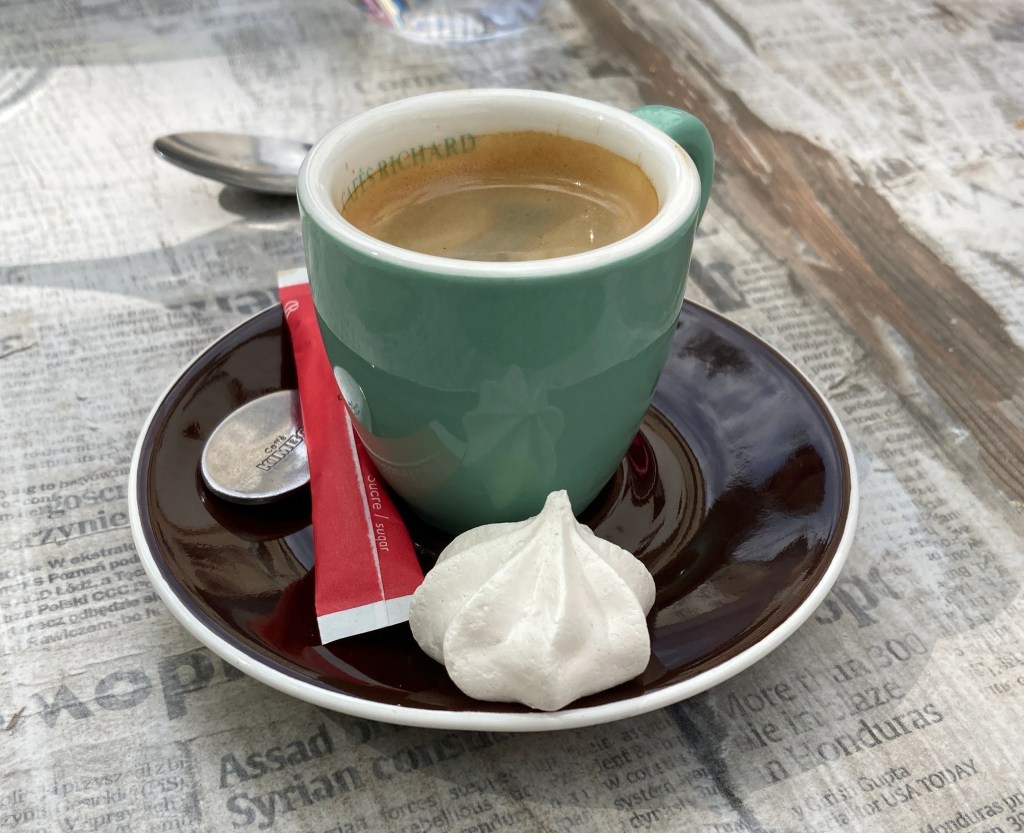
In France this is un café
In its most basic form it is a shot of espresso, always served in a cup and saucer, with a small spoon, sugar – never cream – and a petit biscuit. There are other drinks that are only coffee: un double which is two shots served the same way, un café allongé which is a single with more water forced through, and an americano which is espresso diluted with hot water to cater to the taste of Americans in WWII that found un café to strong – an americano is as close as you will get to a mug of coffee in France. One of my favorites is un café noisette which is an espresso with just a dollop of steamed milk.
One of my frustrations is that often when I order un café, with my best attempt at a French accent, they will either bring me an americano, or clarify that it is espresso I want, as they are so accustomed to folks from UK and USA not wanting a real un café.
In France coffee with milk is rarely consumed after early morning, having a latte in the afternoon clearly signals you are from Starbucks country. Un café is the norm after a meal, but of course without milk.
Un café is also your ticket into the café culture, you can sit for hours at a table, with no one implying that you need to give up your table, participating in the French pastime of people watching, or in my case sketching.
Le café and les cafés are one of the things I like the most about France. Whenever possible I go early and enjoy starting my day watching, sipping, and sketching.
Menu Blackboards, about A4 size (8.5×11.5 inches), for setting on a table, or 2×3 feet for leaning up on the floor next to a chair, or as an a-frame next to the entry of the restaurant are the ubiquitous icons of French dining, as is the Menu du Jour which is chalk-written on them each morning. With a reputation for the best food France is obsessed with normalcy.
A Menu du Jour has three courses: entree, main, and dessert. There may be a choice in each course of two or three items, but the menu is pretty well fixed. Many restaurants will have other menu offerings, but if you observe the locals they tend to order the Menu du Jour, or the Plat du Jour which is simply one of the mains. Why? Because the French are obsessed with normalcy, deviation can result in manifestations – or protest. The stability must not be threatened.
French food is most always done well regardless of the price. We have had quite good meals at obscure, mundane establishments. However there is always predictability. Fridays will have fish, though the country is officially secular according to the constitution, the centuries of Catholicism still are considered normal, even for the majority who never enter a church. The menu will have mostly meat mains, except for Friday, as the French are carnivores, some think fish counts as a vegetarian meal. For dessert you can almost bet there will be chocolate mousse, even if other more creative offerings share the blackboard.
There is good, even great, food to be found and it is worth the search. One such place was Chez Dumonet, an old resturant in Paris where we ate in December – yet even they had a prix fix menu – because the three courses are expected – normalcy.
Lunch is sacred, it is a long and slow affair, even in rural areas with a clientele of farm or construction workers; no sandwich in the cab of a pick-up truck here. Normalcy. There is even a law, though relaxed during COVID, forbidding eating lunch at your desk. Lunch is sacred, normalcy, don’t rock the boat.
Yet even a cursory glance at the history of France makes it clear that it has never been a stable country. For much of its history France was really just Paris, the rest of the country was run by dukes and such who ignored the king and spent their time fighting with each other while taxing their subjects. The famous French Revolution was not some break from tyranny resulting in a government by the people; just a short time later Napoleon was a dictatorial emperor. It was not until the 1900’s that the France we see today began to emerge, and even that was disrupted with occupation by neighboring Germany.
Today the French cling to stability, protecting established practices and institutions. When these are threatened by new laws or programs manifestations are soon to follow. Street closures are even posted on days when a protest is expected, and the Parisian response is “C’est France.”
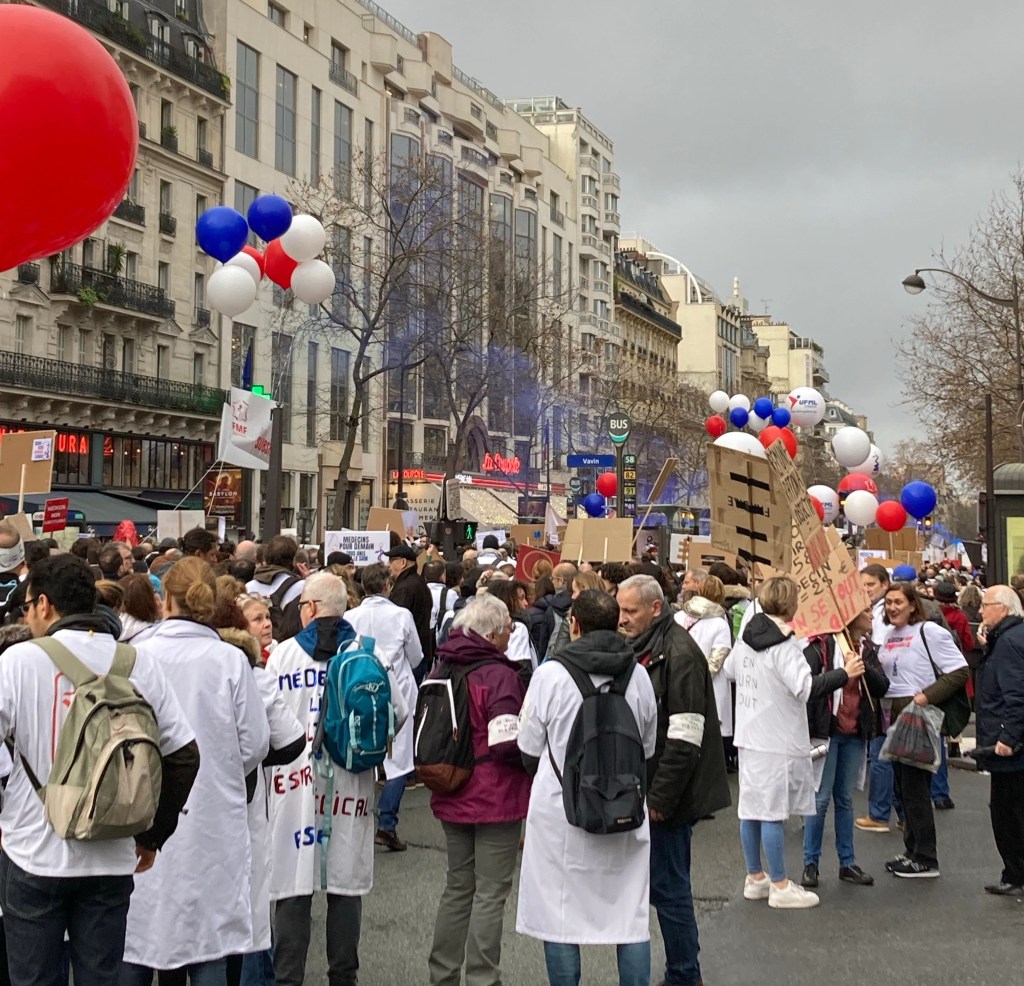
Tricia took this photo of a protest when we were in Paris in January – Healthcare workers.
As I write, protests are happening in major cities, for the second week in a row, with another “General Strike” planned for Saturday, because the government wants to raise the retirement age from 62 to 64. The railways and Metro are shut down, a million people marched along the Champs-Élysées, some turned violent resulting in teargas and broken shop windows. Don’t mess with the normalcy of the earliest retirement of any industrial country.
Yet you can be sure that the restaurants not on the parade route have their blackboards set up, even protesters need a sense of normalcy and where better to find it than over a predictable meal and a glass of wine, ok maybe two glasses, but it is also true that over drinking at lunch is not a French thing. Normalcy.
Though France can be quite tolerant, there is also an undercurrent of selfishness. Shutting down the transportation system does make a statement to the government, but it totally disrupts the lives of millions.
Twice we have had to make major travel changes due to the railway strikes. And with our daughter coming to visit us next week we are concerned about another strike since they are taking the train from Paris Montparnasse, which seems to be protest central, to Flers in Normandy. If the train is shut down we will have no stability and even the best blackboard menu will not make it normal.
























 Been There, Eating This