An Appetite for Arles

After five days in Arles I can confidently say that the food here does not disappoint. Well, except for the one time I ordered a small steak cooked saignant, which in the US would be considered bloody rare, thus the name. As is common here, once they hear my accent, she said, in English, “medium”, I replied, “non, saignant”. It came with just a touch of pink, medium-rare at best by US standards. Thanks to the multitude of folks here from the UK, who tend to like their meat cooked well done, the restaurants often try to compensate, c’est la France.

Our first meal was at Bistrot de Pitchounet, located in a restaurant filled square in the heart of old town.
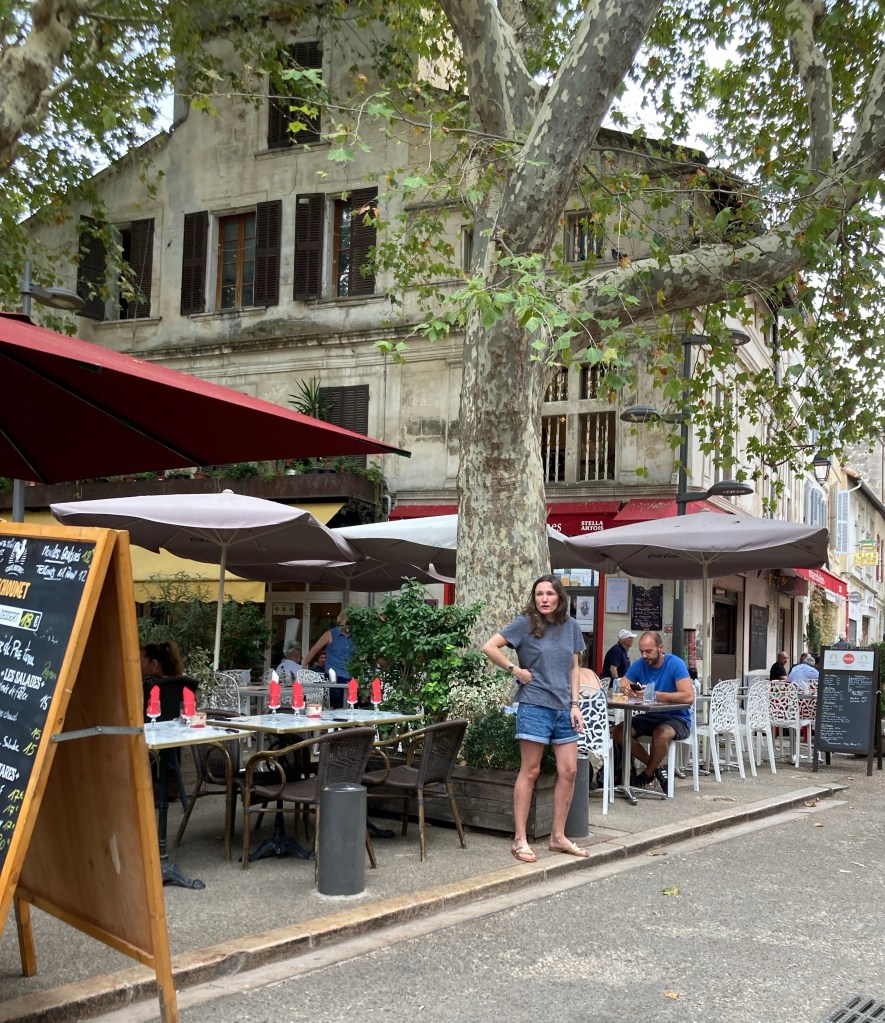
I chatted with the lady in the photo, not only does she work there, but her father is the owner. All of the staff were wonderful, and the food was just as good. I started with a bit of smoked herring, so different than the smoked herring in Norway. This had a much stronger smoke flavor and I liked it better than what I had in Tromsø a few months ago.

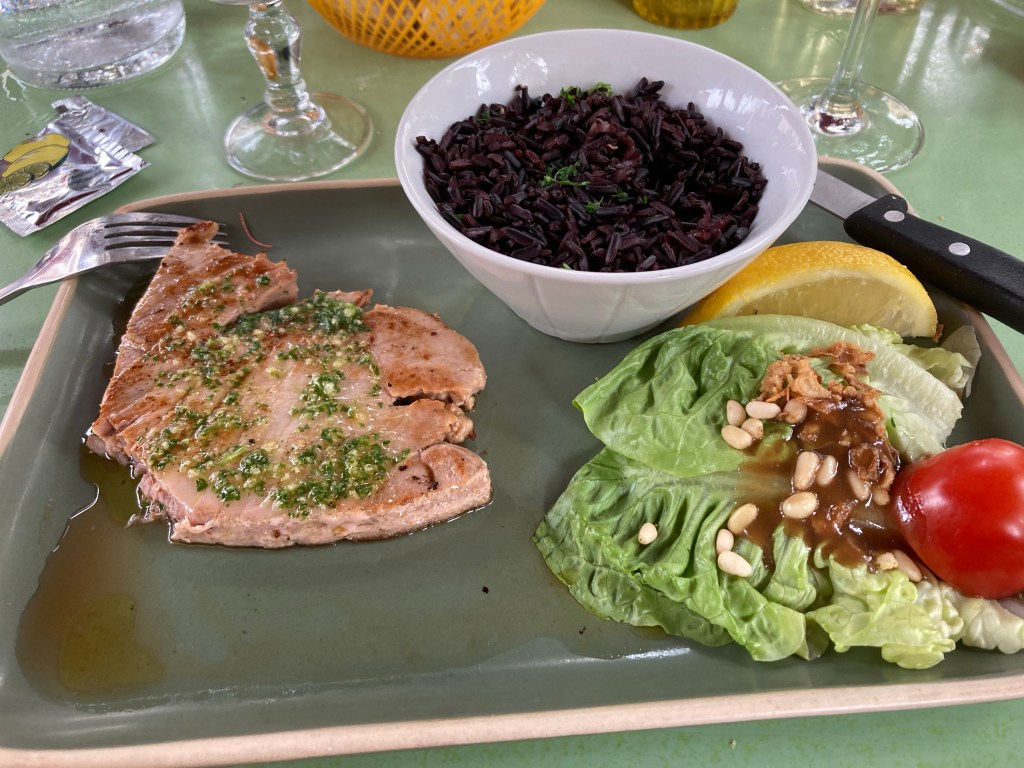
My main was tuna steak, just lightly seared, bien sûr.
Saturday we ate at Gaudina, a small place on a narrow street with service and amazing food. For my entree I had roasted eggplant with olive oil, almonds, tomatoes, and parsley.

My main was grilled octopus. As I have said before octopus must be prepared perfectly or it ends up rubbery, when done right the outside is charred a bit and the inside is moist, this was perfect. The sauce had a bit of spice and it was served on the black rice that is ubiquitous to this region. I have no idea what the crispy, golden accompaniment was, but it was delightful.

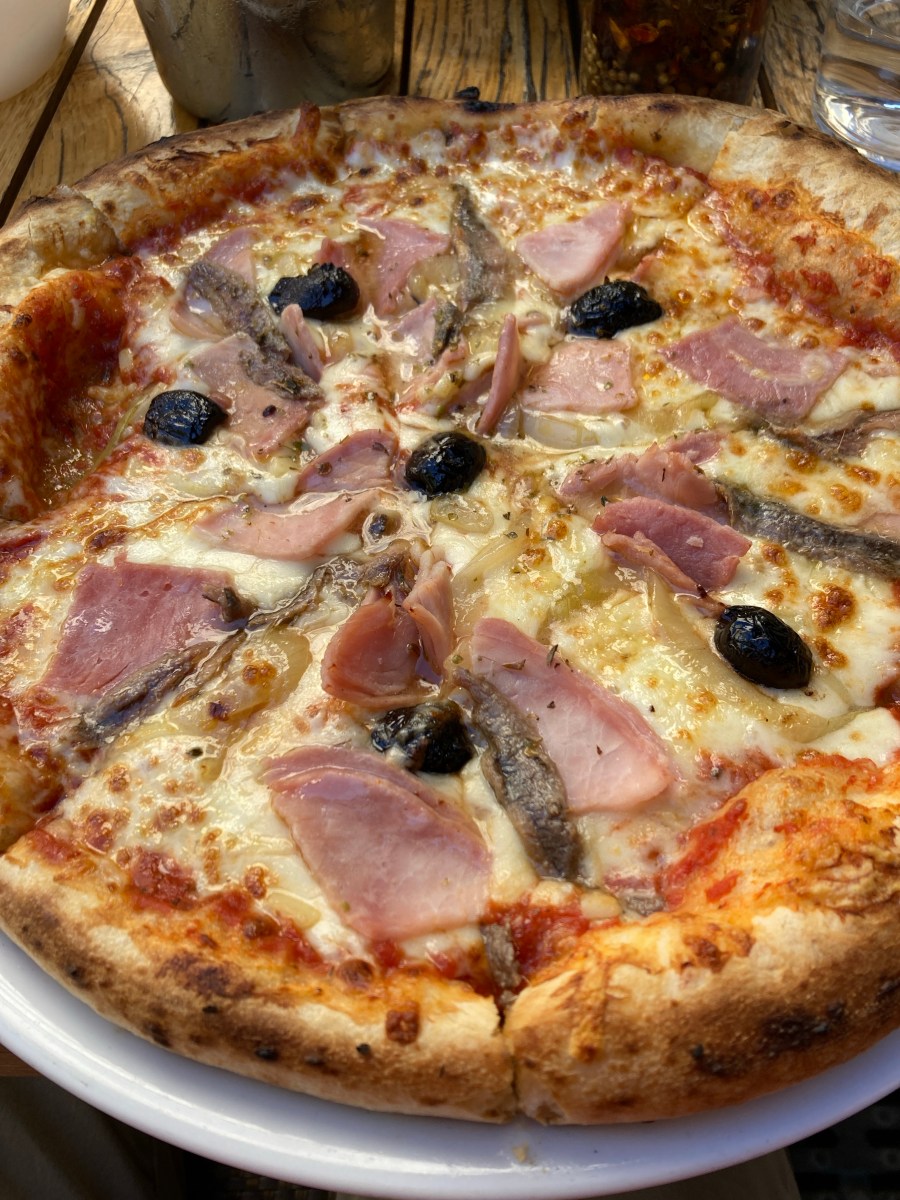
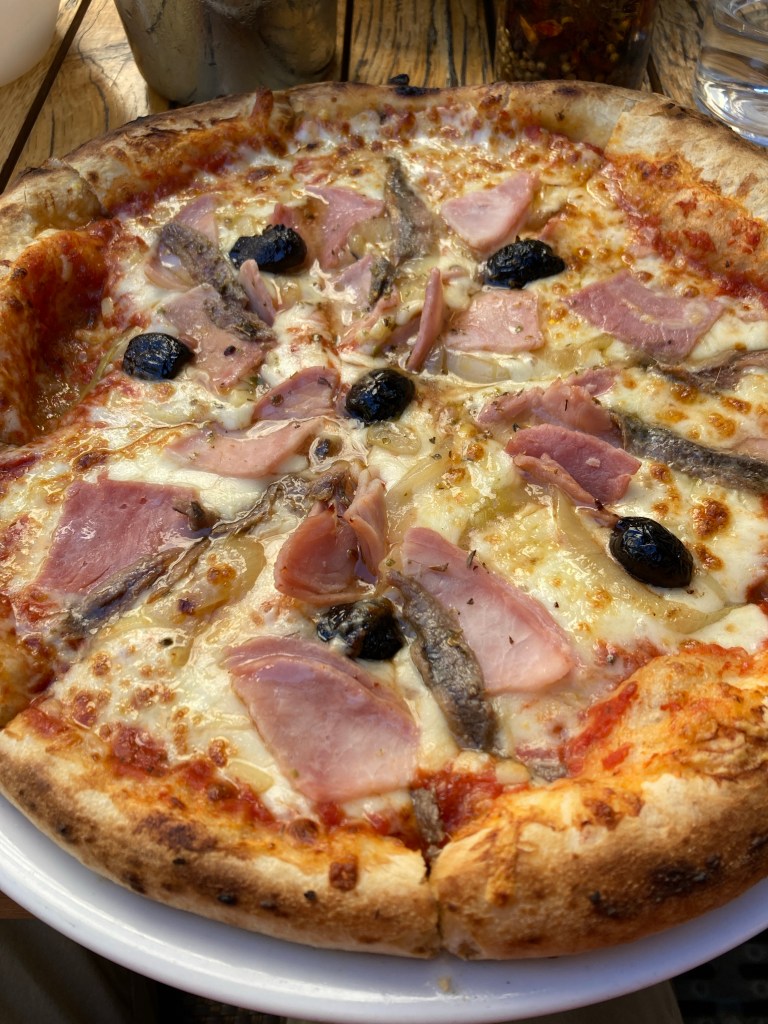
Yesterday I had a wonderful wood fired pizza at Bistro Arlésien. How can you go wrong with a wood fired pizza? They are one of my all time favorites. This one had ham, anchovies, olives, onions, and cheese with a light tomato sauce. I don’t think anyplace in Naples could do better.
Today, we went back to Le Pitchounet, this time I was able to chat a bit with Nikola, the lady in the photo. We started with oysters, the third time this week we have had them. One of the servers told us about the part of the oyster that they call “the foot”. It is the dime-sized, round disk that is usually left connected to the shell after the rest of the oyster is eaten. I have never thought about eating it. He cut it out with a knife so I could taste it. His description was that it was like a sea scallop, and he was right. Why have I never heard of this? We lived and ate oysters for years in one of the top oyster regions of the world, Puget Sound, Washington, USA. Well now we know.

For my main I had a tartare of tuna and salmon. It was interesting that they brought me a bottle of Tabasco, which did in fact work quite well.

Eating is one of the main reasons we travel. This week the food in Arles has resulted in a totally enjoyable time. The Roman remains, sights of Vincent Van Gogh, and a huge market day are just icing on the cake – well, ok, the olive oil on everything, we don’t eat much cake.

An Expat’s Struggles With Ordering Food

The stereotype for many in the USA is that the French are not friendly, well after multiple trips to France, and living in France for a year I can say that is just not true. In general the French are so kind and helpful. When we butcher their beloved language they may correct a bit but most often they encourage our efforts. Sometimes they are too helpful, particularly when it comes to food.

Now before I continue a DISCLAIMER is in order. I enjoy my British friends and their quirky language, we all get to laugh over terms and pronunciations. However my eating preferences are not British and therein is the problem. In an attempt to cater to our tastes, as they (the French) perceive them, they often make adjustments to my order that don’t work for me.

In my last blog I alluded to one of those adjustments, ordering le café. In one hotel they actually brought me a mug of coffee from a 12 cup coffee maker common to most homes in the USA. Other times I say, “Je voudrais un café, SVP,” the server pauses for a minute then asks if I mean an espresso, a question they would never ask a French person. It comes from their experience of bringing an English speaking person a French le café and having the customer unhappy because they wanted a mug of drip or at least an americano – like I said the French are so helpful most of the time.

Second DISCLAIMER. When it comes to anything bureaucratic that help may be hard to come by – this post is all about food.

The French are carnivores, big time. Vegetarians often struggle, though we are seeing some changes making it easier. Meat preferences in France are often quite foreign to US or UK diners.

When it comes to le boeuf they like it rare, really rare. The go-to degree of doneness is bleu, which, just as it sounds, means blue. The piece of meat is seared for no more than 30 seconds on a side and served. For most UK and USA folks they see this and say it is raw, which of course it pretty much is. Here is a photo of one such steak I had when we were with our friends in L’Isle-sur-la- Sorgue.

The next degree of doneness is sanglant which literally means bloody, this would be extra rare in most restaurants in the USA, it is my normal way to order here. Yet what often happens is the server questions me, “medium?” Or the cook just cooks it so there is barely any pink at all. You see the Brits tend to like meat well done, which is considered unthinkable to the French, and to me as well, so like with the coffee they often adjust.

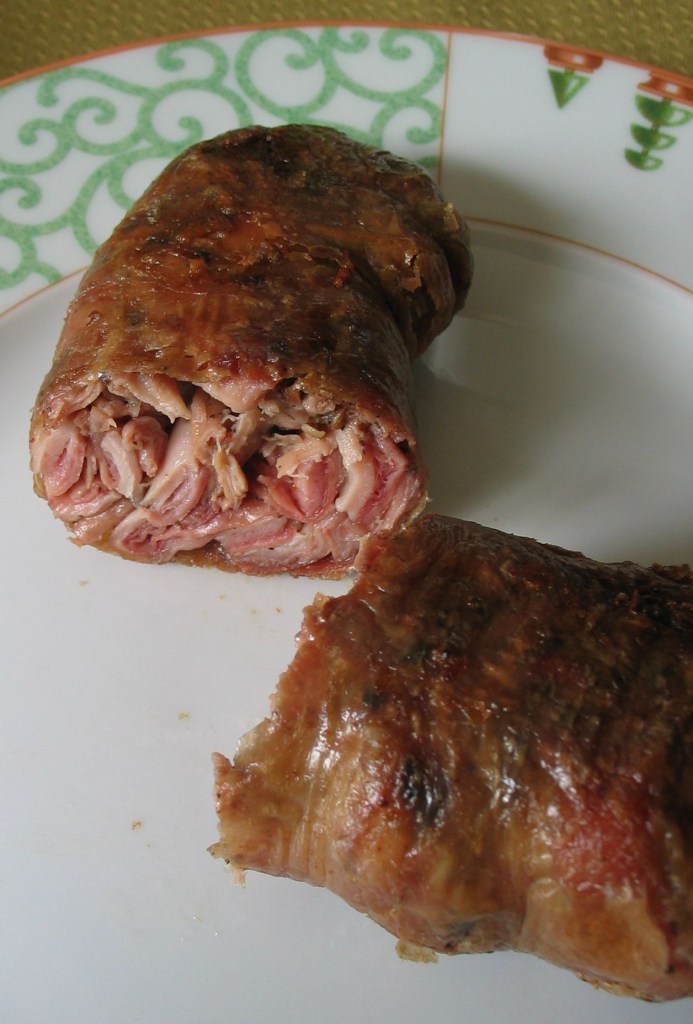
Here in Normandie andouillette, not to be confused with the spicy, smoked andouille from Cajun Louisiana, is on most menus. Here are photos of both.

French andouillette are made from pork large intestines, spices, grains, and onions. They are quite corse compared to the Cajun smoked sausage. Wikipedia says, Andouillettes are generally made from the large intestine and are 7–10 cm (2 3/4 – 4in) in diameter. True andouillettes are rarely seen outside France and have a strong, distinctive odour coming from the colon. Although sometimes repellent to the uninitiated, the scent is prized by its devotees.

The first time I ever ordered andouillette the owner of the open-fired grill restaurant tried to talk me out of it. He said that Americans don’t eat this. I assured him I did. With mustard sauce it is quite OK on occasion. On other occasions the server has asked if I know what andouillette is, or if I am sure. I know they are trying to be helpful, but I also know this expat is not like all the others.

A third challenge here is finding spicy food. With the exception of mustard, which is always Dijon, the French don’t eat much that is spicy. We wanted some salsa, they have Old El Paso, the same brand as we could get in US, but it only comes in mild and extra mild. I can’t imagine what extra mild would be, tomato sauce???

Soon after we moved here we discovered an Indian restaurant not too far away, craving a bit of spicy food we went. It took us a few visits for me to convince the very nice server, that we have come to know well, that when I asked for spicy I meant spicy. In fact last time he actually brought something out that was too spicy for me, that is rare. Yet he is so used to compensating for the French palette that he just naturally tones things down.

In all my years of travel I have attempted to eat like the locals do. I am not like Tony Bourdain was, nor Andrew Zimmern, there are some limits, but in general I say give it a go. Often I end up liking things that might put some folks off, that is one of the joys of travel, and this expat loves the journey of food.

I guess I do agree with Zimmern when he says, “If it looks good, eat it.”